For Homes
We trace gas lines to water heaters, stoves and outdoor living without tearing up rooms to guess. You see the reading and the mark before we quote the repair.
- Gas smell near an appliance
- Gas bill jumped
- Hissing near a gas line
Gas line repair is the professional fixing of a gas supply line in a Mount Pleasant, TX home, starting with safety checks. If you smell gas, leave the building and call 911 and your gas utility first, then call us at (903) 350-9085. NTP Plumbing repairs and installs gas lines across Mount Pleasant, TX — for water heaters, stoves and outdoor living — and pressure-tests every line before it goes into service. We are open 24 hours, Monday–Sunday.
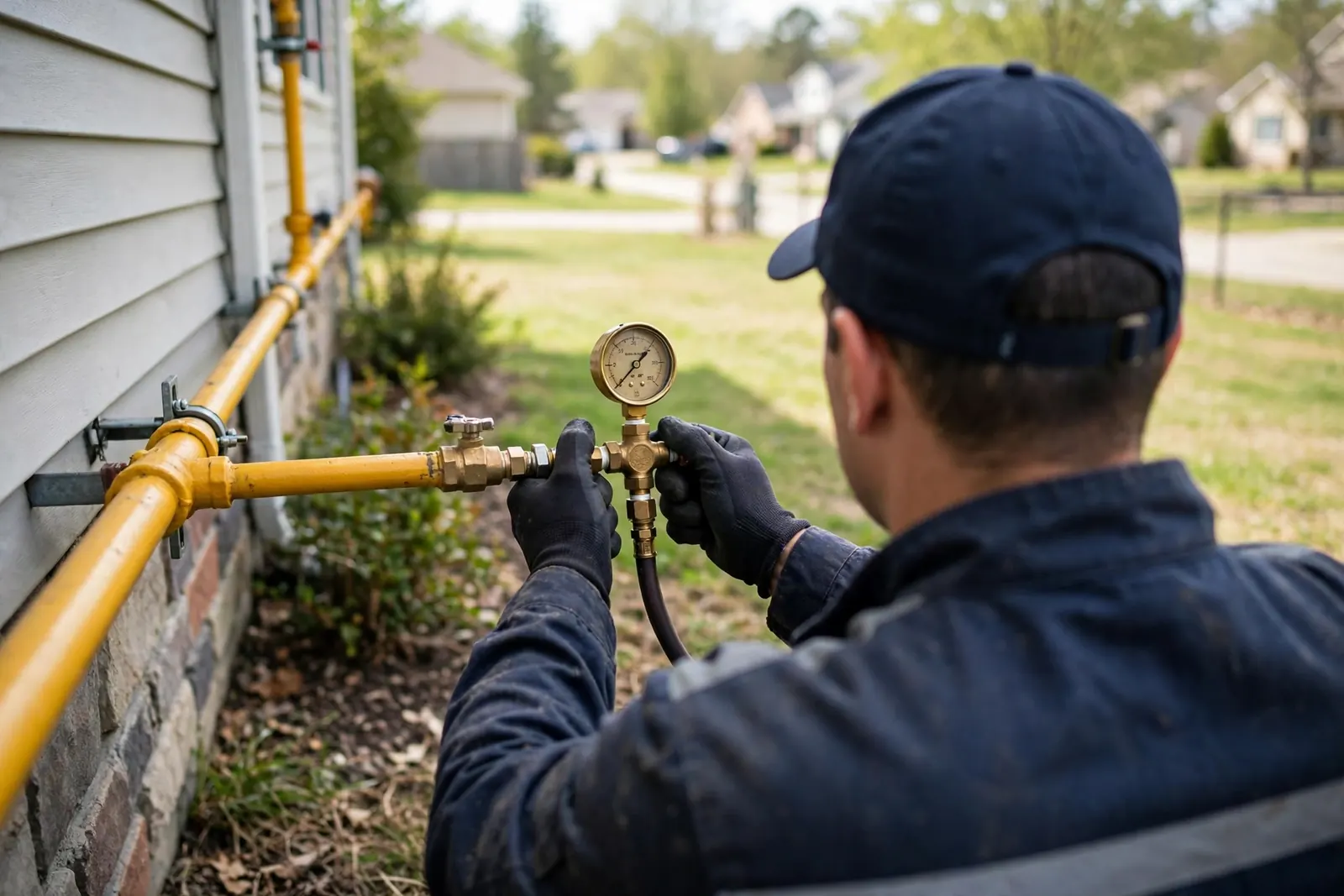 Pressure testLeak checkMarked location
Every gas line visit includes the inspection, the leak check and a quote. We pressure-test the line, check every joint and fitting, and mark the run before we quote anything. If the problem turns out to be an appliance valve you can shut off yourself, we tell you that instead of selling a repair.
We isolate the gas line with a pressure gauge and watch it. A drop tells us gas is escaping somewhere on the run; a hold means the line is sound and the problem sits at an appliance or fitting.
We check every joint, valve and fitting along the run with an electronic gas detector. On buried lines we follow the pipe path with tracer equipment. Most leaks get pinned to the exact fitting that failed.
If the pressure test holds and the smell persists, we check the appliance connections, flex lines and shutoff valves one by one. A worn flex line or a loose fitting can smell like a line leak, and the check settles it in one pass.
You see the pressure reading and the tape mark on the line before we quote anything. That mark is where the repair happens, so you know exactly what the job involves.
You get a quote for the repair, including the section replacement, before work starts. If the line needs a bigger replacement than expected, we stop and requote rather than running up a bill.
The approach is the same for a home and a rental property. What changes is the access, the schedule, and who needs the paperwork for a gas line repair job.
We trace gas lines to water heaters, stoves and outdoor living without tearing up rooms to guess. You see the reading and the mark before we quote the repair.
We isolate the affected line, locate the leak and schedule the repair around your tenants. Photos and readings go to the property manager for the owner report.
A plain-language look at what gas line repair involves and when it is needed. The City of Mount Pleasant charges a $75 residential plumbing permit fee where a permit is required (inside city limits) — that is a City fee, not our price.
See how it worksGas line repair in Mount Pleasant, TX is the work of finding and fixing gas escaping from lines, fittings or appliance connections. Our technicians pressurize the line, watch the gauge for drops, then check every joint with an electronic detector to narrow the leak to a single fitting or run. We check supply lines, shutoff valves, water heater connections and the main line before we recommend any repair.
Mount Pleasant, TX homes deal with clay soil movement and summer heat that stresses gas pipe alike, and rural homes often run on propane. If you smell gas, leave the building and call 911 and your gas utility first, then call us at (903) 350-9085. We are open 24 hours, Monday through Sunday, for gas line calls.
A gas leak is found by testing and checking, not by guessing.
Every gas line call follows the same five steps. You will know what we are doing and why at each one.
We start by asking when you smelled gas, where the smell is strongest and whether any appliance was recently moved or installed. Then we walk the house with you, checking the water heater, stove and outdoor connections and the shutoff valves. The walk-through usually narrows the search to one line.
We connect a pressure gauge to the gas line and isolate the run. A drop on the gauge tells us gas is escaping on that run. If the gauge holds, we move to the appliance connections and flex lines. This step separates a line leak from an appliance problem before we touch a tool.
Out comes the electronic gas detector. We check every joint, valve and fitting along the run. On buried lines we use a tracer wire and grounding equipment to follow the pipe path. Most leaks get pinned to the exact fitting.
We mark the spot with tape and a measurement from a fixed point, then confirm with a second check, usually a bubble test at the joint. You see the reading and the mark before we quote anything. If the leak is under a slab or in a wall, we tell you what the access opening will look like and where it lands.
You get a quote for the repair, not an hourly guess. We explain whether a fitting can be replaced or a section of line needs to be cut out and re-run. Work starts when you approve it.
Move across a circle, or focus it and press Enter, for an illustrative thermal view of this gas line repair photograph.
Sniffs for gas at every joint, valve and fitting along the run. It finds a leak without opening a wall.
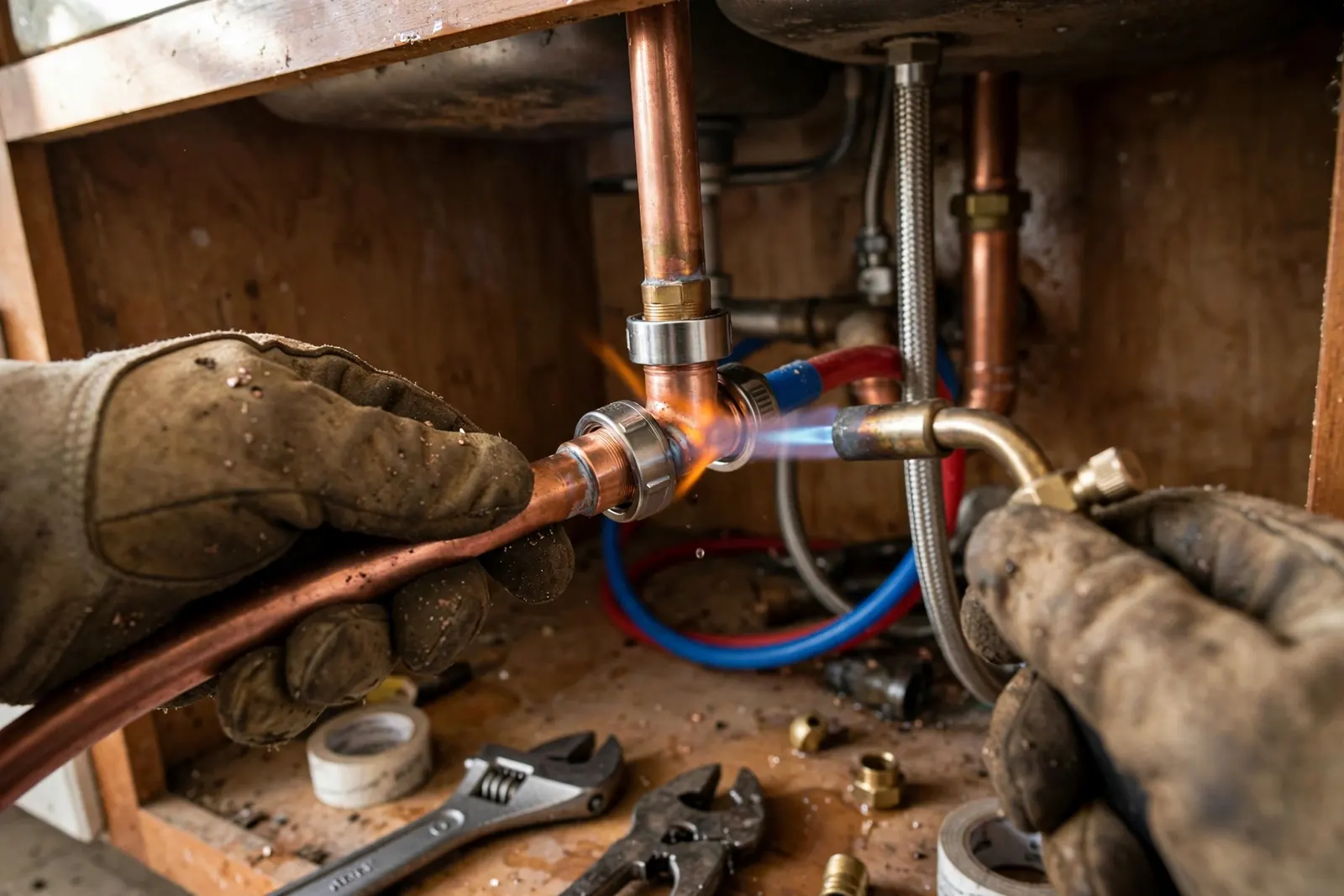
Brushed onto a joint to confirm a leak by sight. A bubble at a fitting is proof the joint is failing.
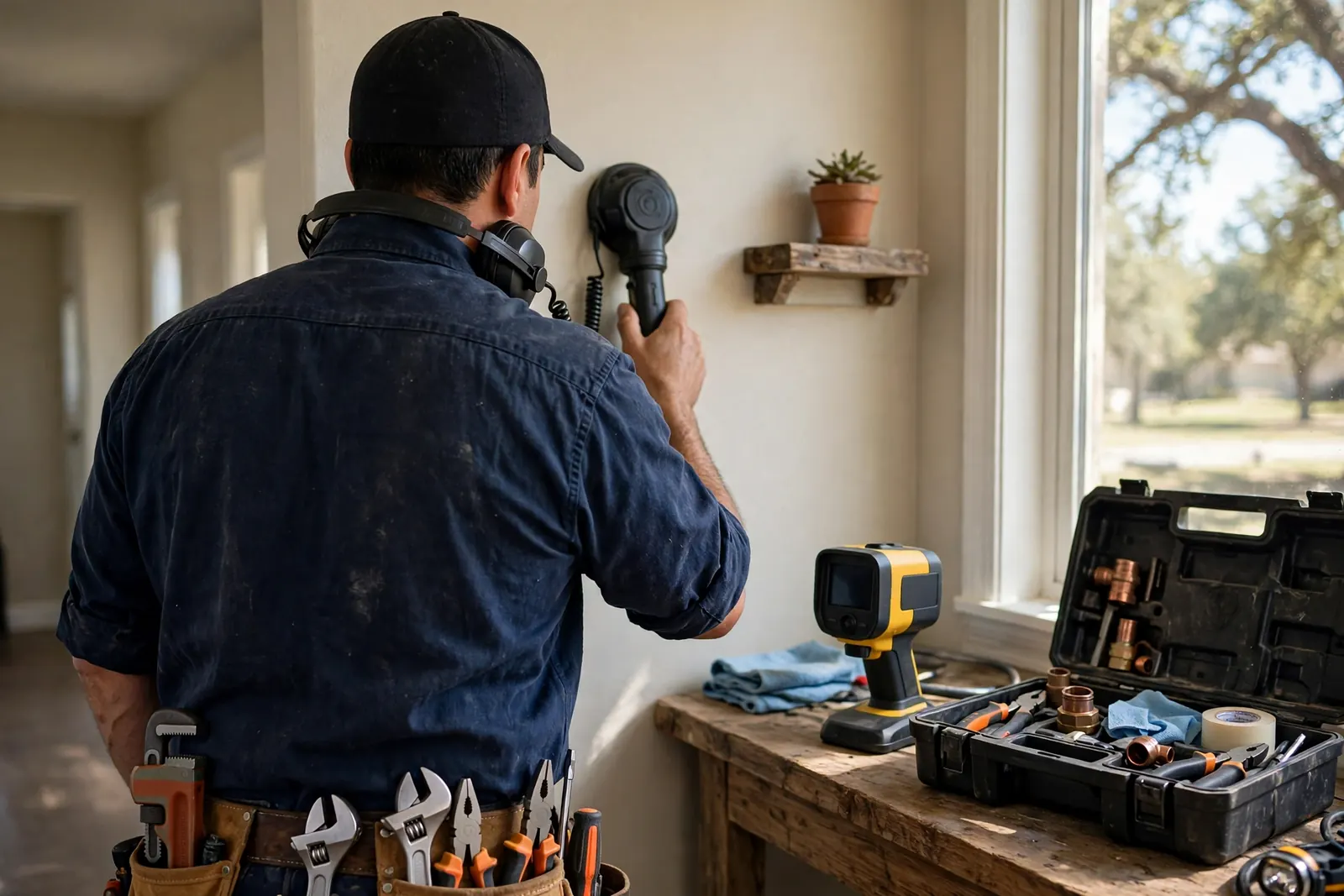
Connected to the gas line to isolate and test the run. A drop on the gauge confirms gas is escaping.
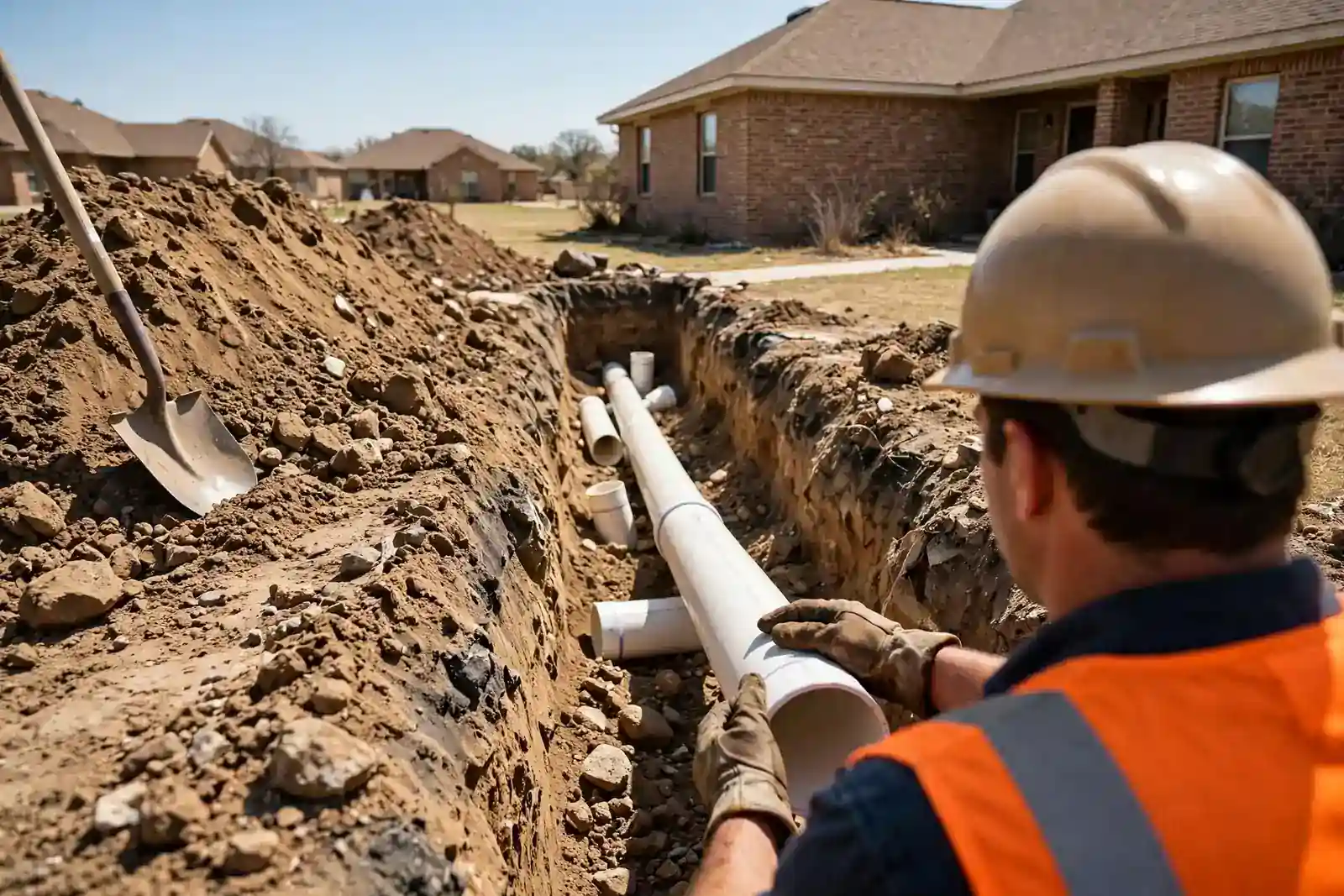
Follows a buried gas line so we know exactly where to check. This keeps the dig to one hole at the located break.
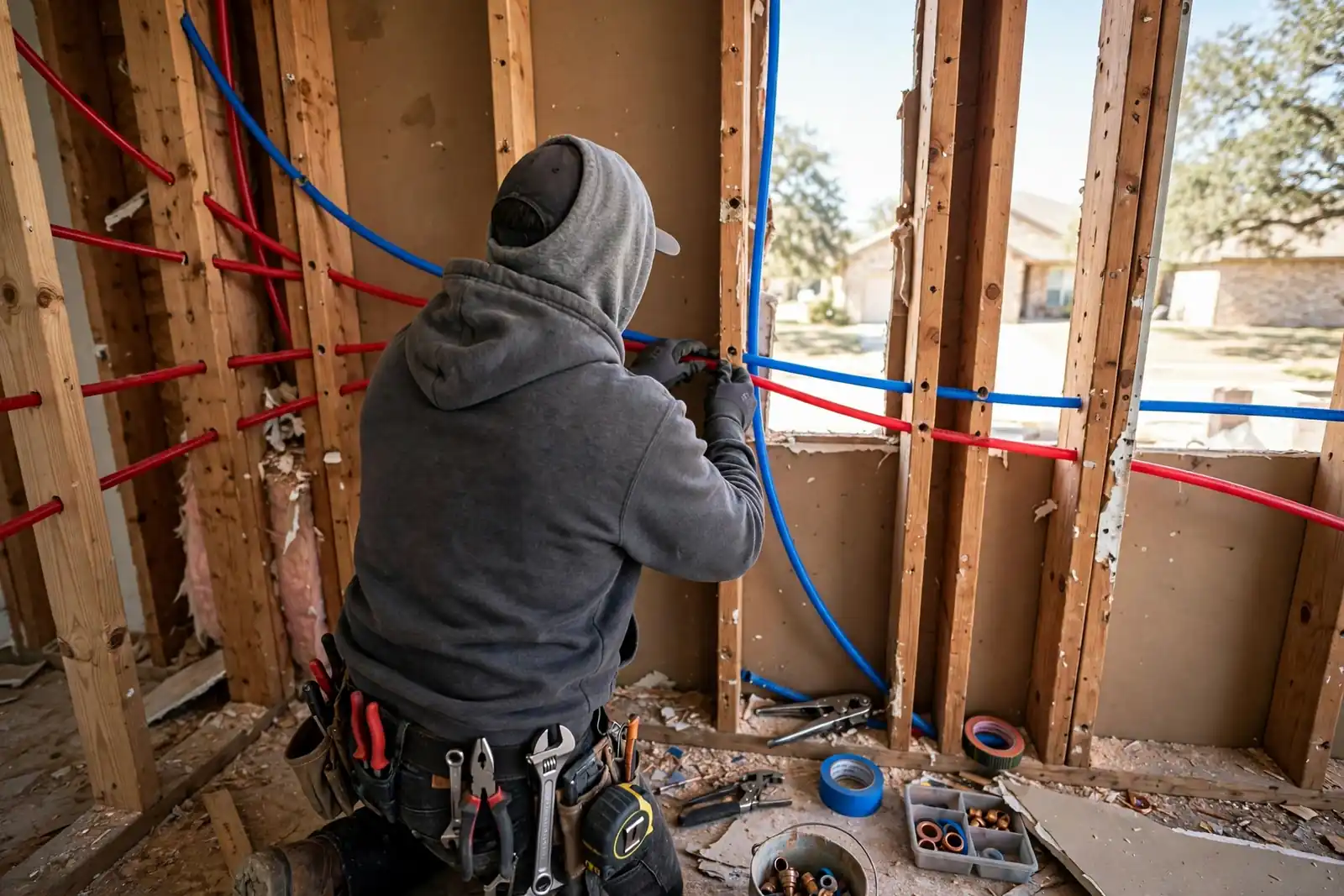
Used for the repair once the leak is located. We cut out the damaged section and fit the replacement in steel or CSST.
Thermal views are illustrative, generated from photographs of gas line repair work in Mount Pleasant, TX.
Steel gas pipe is threaded and joined with sealant rated for gas. Every joint is checked before the line is pressurized.
Corrugated stainless steel tubing runs gas to appliances where a flexible line fits better. Every fitting is torqued and checked before the line is pressurized.
We shut off sections of the gas system one at a time and watch the gauge. This narrows the leak to a single run before we bring out the detector, which saves time and keeps the search tight.
We check every joint along the run with the detector and compare readings. The strongest reading is the leak. We confirm with a bubble test before marking the spot.
On buried lines, we follow the pipe path with tracer equipment so we know exactly where to check. This keeps the dig to one hole at the located break instead of a trench across the yard.
When the line tests clean, we check the appliance connections, flex lines and shutoff valves. A worn flex line can smell like a line leak, and the inspection settles which one you have.
The gas bill jumped and the meter moves with every appliance off.
We pressure-test the line, isolate the leaking run and use the electronic detector to find the failure. If it is an appliance connection, we repair it; if it is a line, we quote the section replacement.
Outcome: You get a located leak, a quote and a meter that stops moving before we leave.
A gas smell near the stove in a home in Southgate.
We run a pressure test and check the stove flex line and shutoff valve with the detector to confirm the source. Then we mark the fitting and quote the replacement.
Outcome: The leak is fixed at the fitting, and the smell goes away.
A rental property in Eastwood Hills has a hissing sound at the gas meter.
We trace the service line, locate the break and repair the section. Photos of the mark and the repair go to the property manager for the owner report.
Outcome: One dig, one repair and documentation the owner can file.
A worn flex line behind a water heater.
We check the flex line, shutoff valve and connections with the detector before replacing anything. The repair happens at the confirmed fitting.
Outcome: One new flex line and valve instead of a full re-run.
A home needs a gas line for a standby generator.
We size the line to the generator load, run it from the meter, pressure-test it and check every joint. The hookup gets quoted and scheduled around your household.
Outcome: The generator is connected and tested with no disruption to the household.
Mount Pleasant, TX sits on clay soil that moves with the wet and dry cycles, and that movement is hard on buried lines. Summer heat stresses older gas pipe, while the occasional hard freeze can split an exposed line in an uninsulated wall. We see a run of gas calls when heaters come back on in the fall and after the first freeze.
Homes in Downtown Mount Pleasant, TX and Eastwood Hills often have older steel gas lines, while newer builds out toward Carolina Way and Deer Park Estates use CSST. Both fail, just differently. Our trucks carry a gas detector, pressure gauges and tracer equipment so we can test, locate and confirm while we are there.
For gas line repair in Mount Pleasant, TX, we mark the spot and quote the repair before any wall or concrete is touched. We work to the 2024 International Fuel Gas Code adopted by Mount Pleasant, and permits are handled when required.
Example — a typical call. The stories below are illustrative examples of the kind of gas line repair calls we take, not a record of a specific past job.
Before: The pressure test showed a drop, and the detector pinned a gas leak at a fitting under the slab.
After: We rerouted the gas line overhead instead of breaking the slab. The floor stayed intact.
Keep the new line protected and check the water heater connections once a year.
Before: A rental property near Rural Mount Pleasant, TX had a gas smell in the yard and a meter that never stopped.
After: We traced the service line with tracer equipment and located the break. One dig, one repair, and the yard was backfilled. The meter stopped moving.
Watch for dead vegetation along a buried line. A yearly meter check with all appliances off catches a new leak early.
Before: A gas smell appeared behind a stove in Downtown Mount Pleasant, TX. The homeowner expected the whole wall to come down based on a previous quote.
After: We confirmed the leak at the stove flex line with the detector. The repair took one small access hole.
Check the stove flex line and shutoff valve annually.
Most gas calls start with a symptom, not a location. Here are the ones we see most and what happens if they sit.
A located leak and a quote, with the floor and walls intact.
A gas leak can fill a room before you notice it. Gas line repair in Mount Pleasant, TX finds the source while the fix is still one fitting instead of a re-run. We isolate the line, shut it down and give you a quote before the problem grows.
Gas line repair in Mount Pleasant, TX stops gas from escaping under your home. Clay soil in Titus County swells and shifts when it stays wet, and that movement stresses buried lines and fittings.
A leaking fitting or worn flex line can waste gas around the clock. Gas line repair in Mount Pleasant, TX separates an appliance leak from a line leak so you fix the right thing once. Once the leak is fixed, the wasted gas stops and the bill settles back.
We mark the leak location on the floor or wall with tape and a measurement before anyone cuts. Gas line repair in Mount Pleasant, TX means one small access opening instead of opening the wall to search. You pay for the repair, not for our search.
Clear records from your gas line repair job that you can keep and share.
Pressure readings and located spot
Tape and measurement from a fixed point
Images of the mark and reading
Quote for the fix
Where the smell shows up rarely tells you which part failed. The test does.
Buried and interior gas lines.
Connections that leak at the appliance.
Flex lines, valves and fittings.
Gas line repair calls across Mount Pleasant, TX, in ZIP codes 75455 and 75456. If your street is not listed, call and ask — we will confirm whether we can reach you.
Based in Mount Pleasant and covering the places around it. Pick one for local details.
If you smell gas, leave the building and call 911 and your gas utility first, then call us at (903) 350-9085. Do not flip light switches, use a phone inside, or light anything while you leave.
Gas line repair and installation for water heaters, stoves and outdoor living, including leak checks, line replacement, and new runs for gas appliances. Work follows the 2024 International Fuel Gas Code adopted by Mount Pleasant, and permits are handled when required.
A rotten-egg smell, a hissing sound near a gas line or appliance, a gas bill that jumps without a change in use, or dead vegetation in a line over a buried gas run. If you notice any of these, leave the building and call 911 and your gas utility first.
Yes — we run gas lines for standby generators and outdoor appliances. The line is sized to the appliance load, pressure-tested, and checked for leaks before it goes into service.
Yes. Rural homes around Mount Pleasant, TX often run on propane, and we repair and install propane-fed gas lines. Verify the supply type and shutoff location at the address before work starts.
Other services from the same team.
If you smell gas, leave the building and call 911 and your gas utility first, then call us. We will pressure-test the line, locate the leak and give you a quote. Call (903) 350-9085 and we will get a technician headed your way.
Call NTP Plumbing at (903) 350-9085 for gas line work in Mount Pleasant, TX. We are open 24 hours, Monday–Sunday. If you smell gas, leave the building and call 911 and your gas utility first.