For homeowners
A repipe means water off for part of the day and walls opened in a few places. We tell you which days and which rooms before we start.
- Older homes on galvanized pipe
- Repeat pinhole leaks in copper
- Pressure drops at upstairs fixtures
Whole-home repiping is the professional replacing of a home’s old supply lines in Mount Pleasant, TX, usually with new PEX or copper pipe. Rusty water, pressure that has faded to a trickle, and a leak every few months all point the same way: the system itself is done. NTP Plumbing repipes whole homes in Mount Pleasant, TX in PEX or copper, with the work done to the 2024 International Plumbing Code adopted by the city. Open 24 hours, Monday through Sunday.
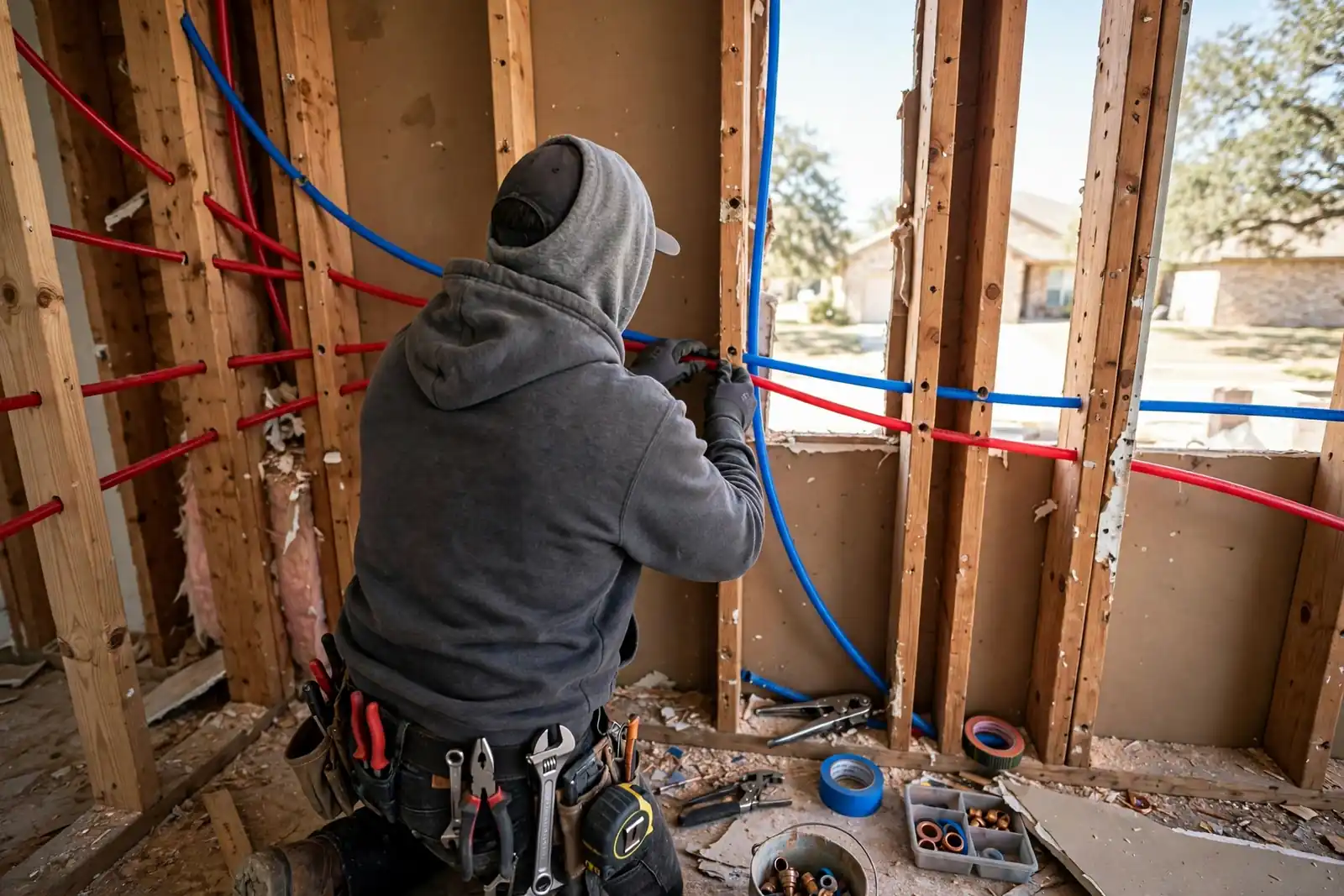 Whole homePEX or copperWater back on
A repipe is priced as a complete system replacement. Here is what is included in a standard whole house repipe, and what we quote separately if you want it done at the same time.
Every hot and cold supply run from the meter to the last fixture is replaced. Old galvanized or failing copper comes out, new PEX tubing or copper pipe goes in, sized correctly for the fixtures on each branch.
Old gate valves seize and stop sealing. We install new shutoff valves at the main and at each fixture group so you can isolate water without shutting down the whole house.
Each new line is charged and held under pressure with a gauge before anything is covered. We record the test and walk you through the results rather than asking you to take our word for it.
We pull the plumbing permit and meet the inspector on site. The signed-off record is yours to keep, and it is what a buyer's inspector will want to see when you sell.
We close the access points we opened, haul off old pipe, and sweep the work areas. Drywall patching and painting are quoted separately if you want a finished wall, and we tell you that upfront.
The approach is the same for a home and a rental — repiping is checked the same way in both. What changes is the access, the schedule, and who needs the paperwork for a whole-home repiping job.
A repipe means water off for part of the day and walls opened in a few places. We tell you which days and which rooms before we start.
Scheduled repipes need to work around tenants. We plan the sequence so water is back on each day wherever possible, and we document the work for the property file.
A plain-language look at what Repiping involves and when it is needed. The City of Mount Pleasant charges a $75 residential plumbing permit fee where a permit is required (inside city limits) — that is a City fee, not our price.
See how it worksA repipe replaces the water supply system of a house — every hot and cold run from the meter to the fixtures — in new pipe. In Mount Pleasant, TX the need usually traces to age: the median home was built in 1978, more than half the stock predates 1980, and homes from the 1940s–1960s commonly still carry galvanised steel supply lines that corrode from the inside until the bore is a fraction of what it was.
A repipe is planned around the house, not the pipe. A single-story ranch usually routes overhead through the attic, with short drops to each fixture; a two-story or multi-bath custom home needs longer runs and more access points, and the route is walked with you before anything is cut. Cast-iron drains from the same era crack as the clay soil moves, and polybutylene supply systems installed through the 1980s–1990s — including the 1999–2001 cusp — develop microfractures at fittings. We never assert a home has polybutylene without an inspection; the year only tells us to look. Water is restored as sections come online, and every line is pressure-tested before it is closed in.
A repipe is not a bigger repair. It is a new water system inside the old house.
A whole house repipe is a planned project, not an emergency scramble. Here is the sequence we follow so you know what happens each day and when the water comes back on.
We start at the meter and trace every line through the house, noting fixture locations, shutoff valves, and where the new runs can go. You get a clear scope and a quote before we cut anything.
Floors get drop cloths, furniture gets moved or covered, and we set up containment where drywall will open. Water is shut off at the meter and drained down. We tell you exactly which hours the water will be off so you can plan around it.
Old lines come out and new PEX tubing or copper pipe goes in, routed through attics, walls, and crawl spaces. We use a pipe cutter and PEX crimping tool for clean connections, and a soldering torch where copper joints are specified.
Every new line is pressure-tested with a gauge and held to confirm there are no leaks before anything is closed. We check flow at each fixture and confirm hot and cold are on the correct sides. Nothing gets covered until the test holds.
We close the access points, clean up, and walk the house with you fixture by fixture. You get the permit record and a rundown of what changed. If you want drywall patched and painted, we tell you what that involves before the project starts.
Move across a circle, or focus it and press Enter, for an illustrative thermal view of this whole-home repiping photograph.
Makes consistent, code-compliant connections on PEX tubing. Crimp rings are set to spec and checked, which matters more than speed when the joint is going behind drywall.
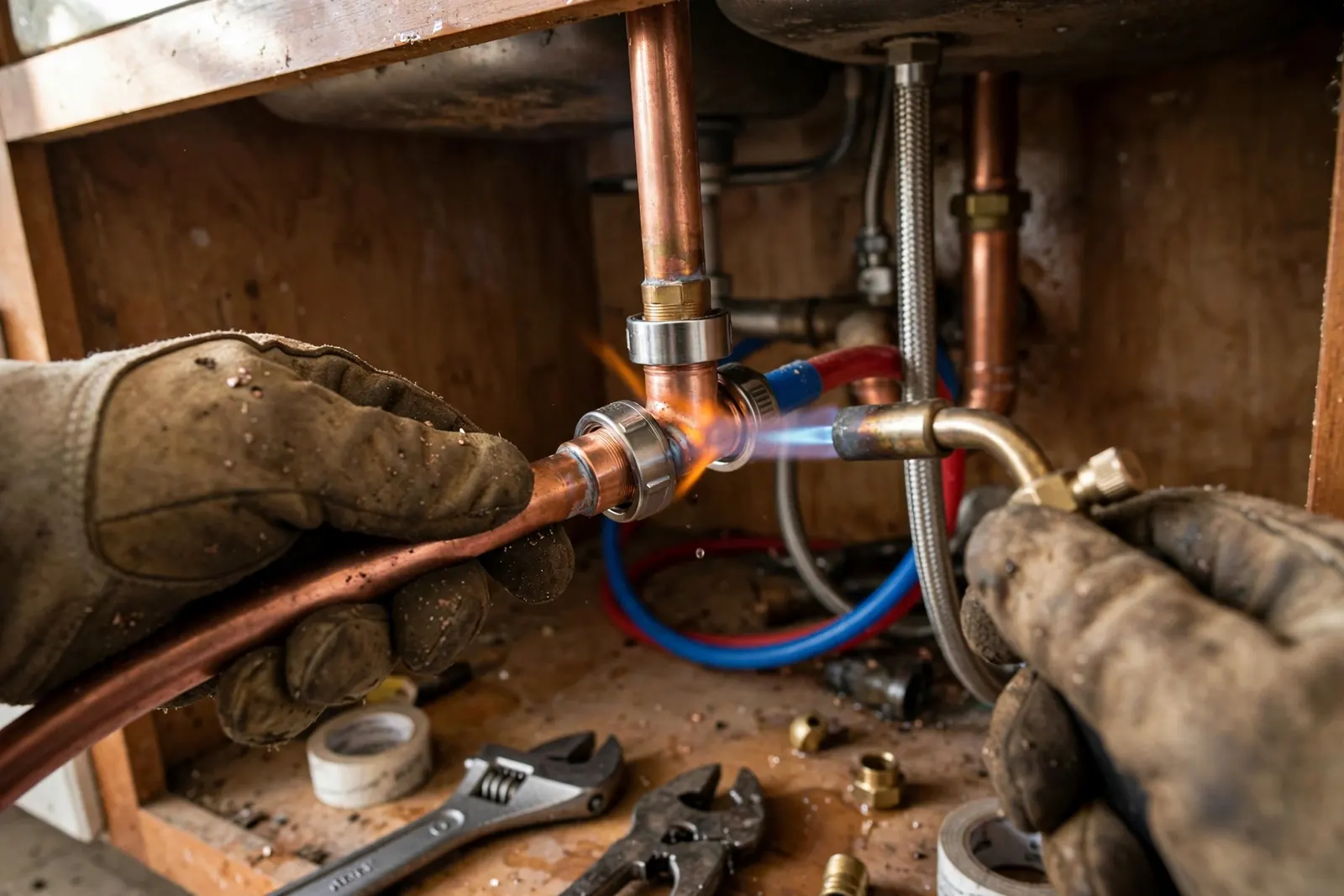
Clean cuts and properly soldered joints on copper runs. We use them where copper is specified or where existing copper is being tied into the new system.
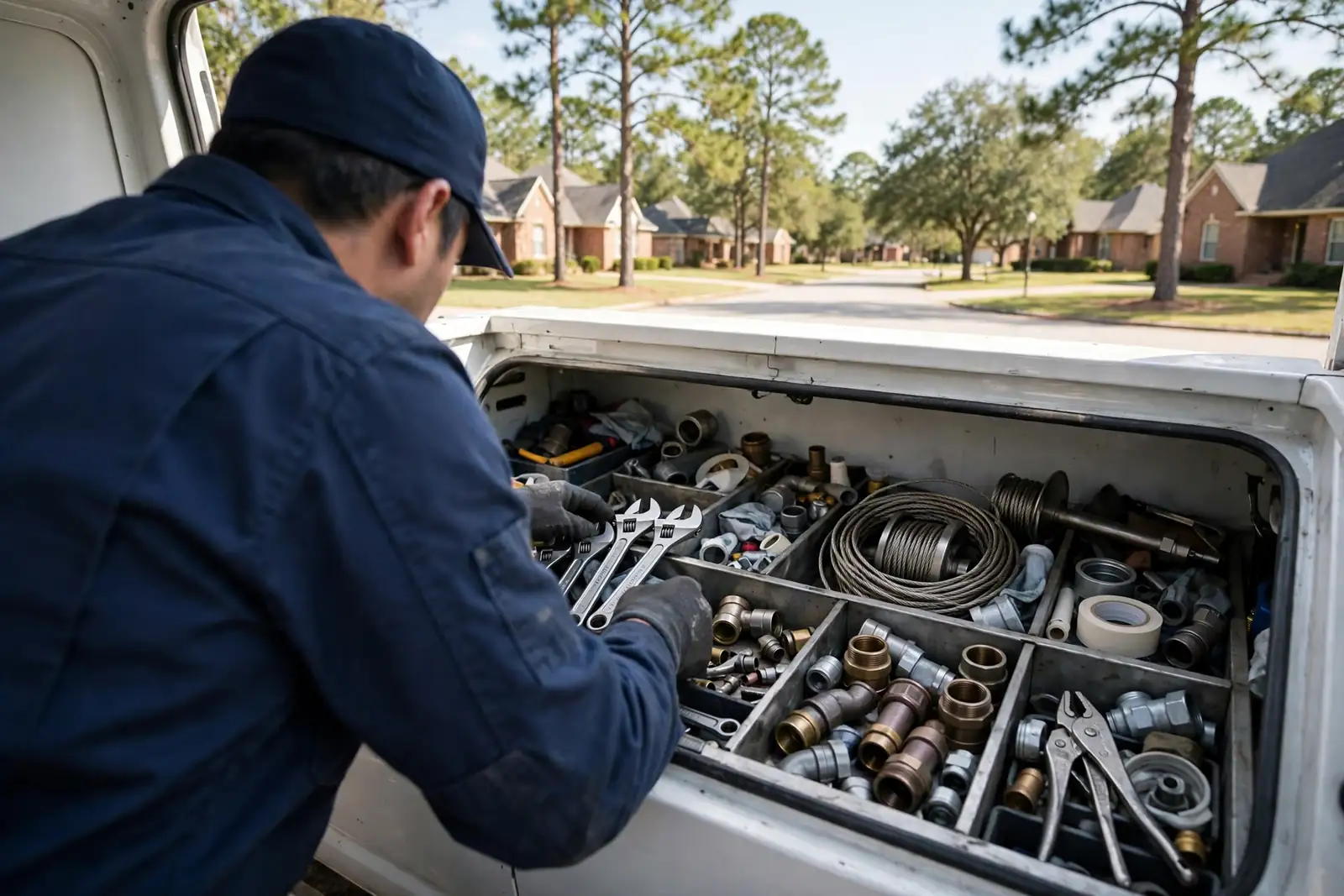
Confirms the new system holds pressure before anything is covered. A gauge reading is proof; a visual check is not.
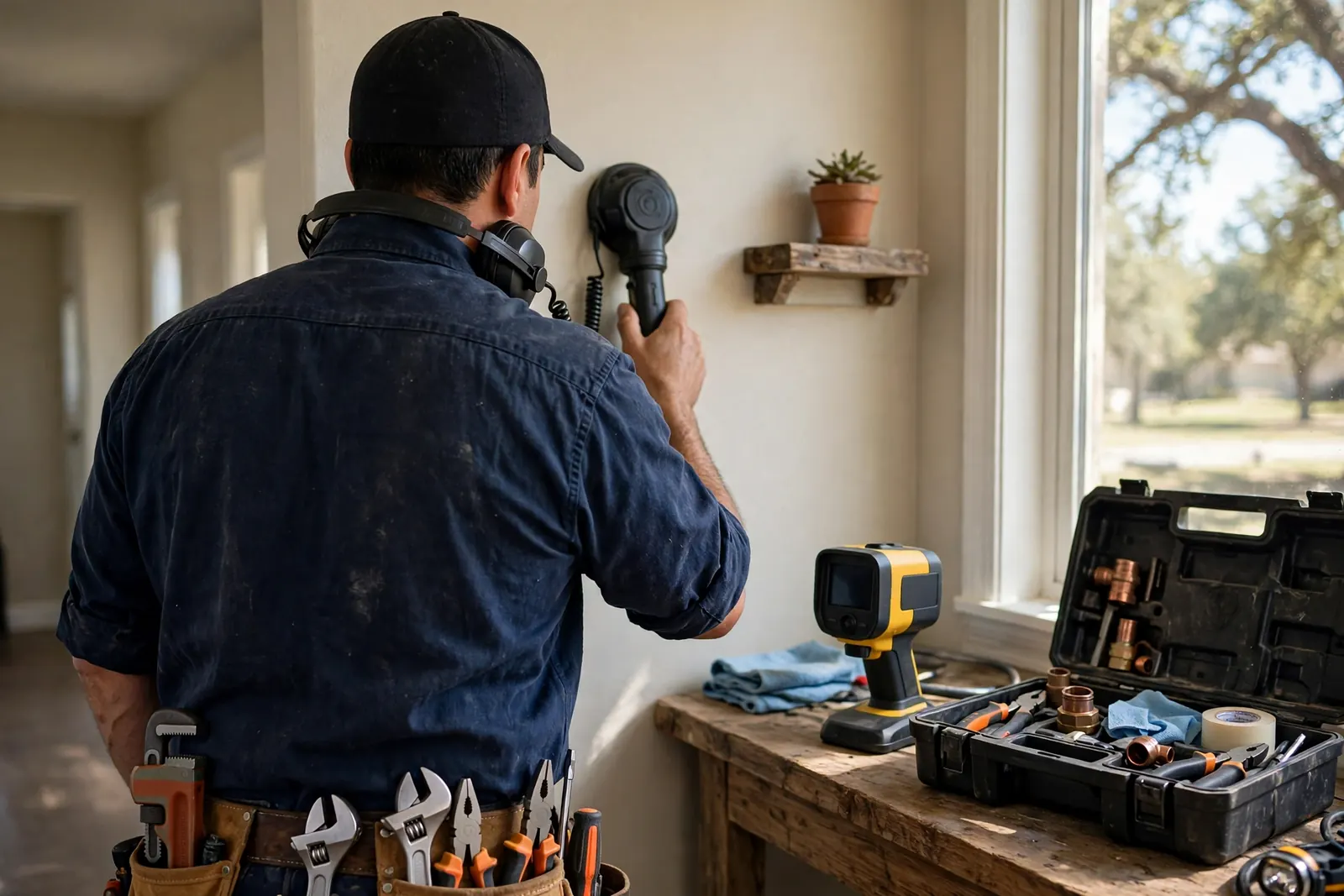
Finds hidden leaks before we quote, so the scope reflects the real problem instead of a guess based on where the water shows up.
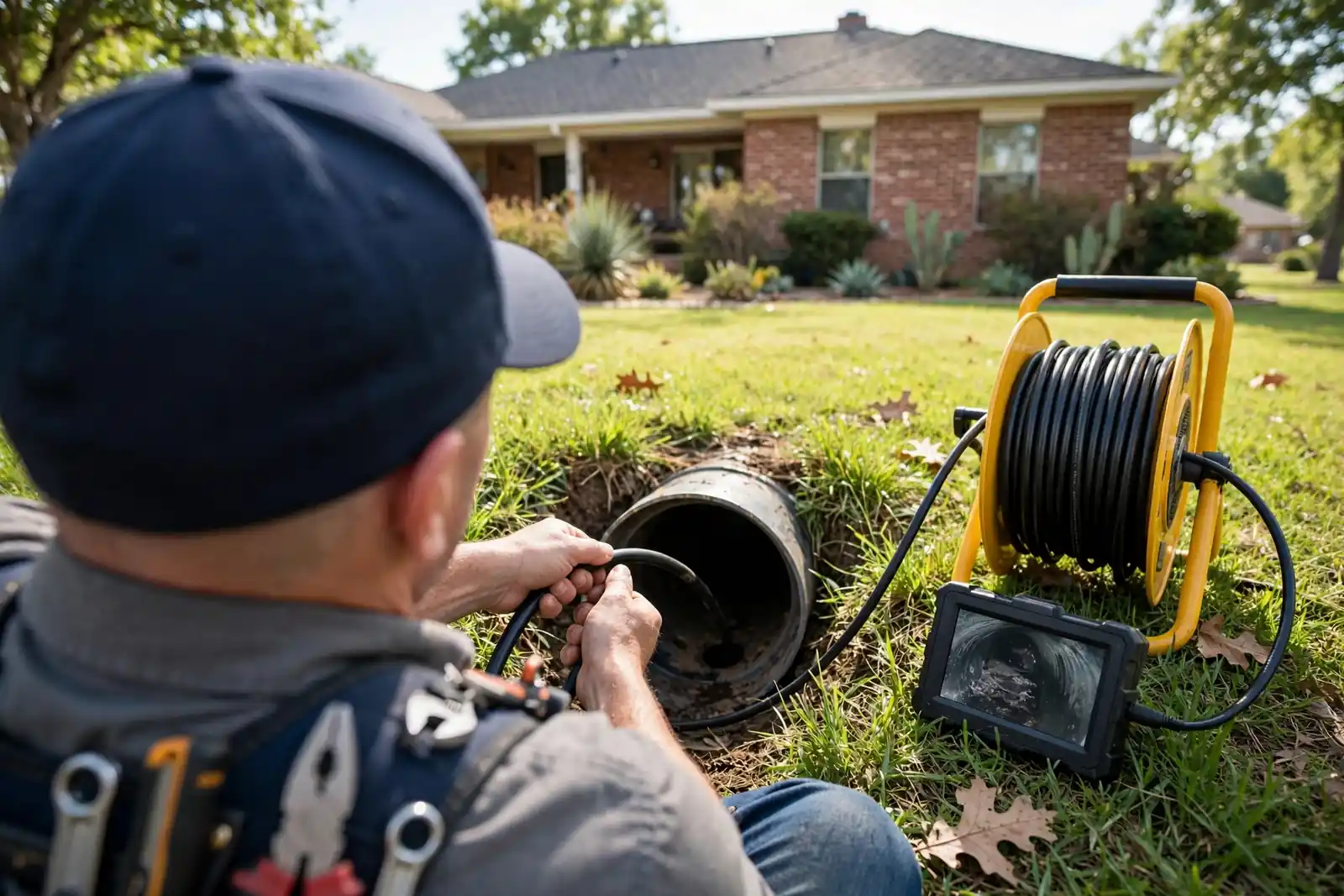
Lets us check the drain and sewer lines while walls are open, so a failing waste line does not surprise you after the repipe is finished.
Thermal views are illustrative, generated from photographs of repiping work in Mount Pleasant, TX.
Used where a transition or repair needs a reliable mechanical connection. We match the fitting to the application rather than forcing one type everywhere.
Pipe sizing, support spacing, and backflow protection are planned to code before work starts. That is what the inspector checks, and it is what keeps the system safe and insurable.
Every new line is charged and held under pressure with a gauge. Nothing gets covered until the test holds. This single step prevents the most expensive kind of callback.
Drop cloths, plastic containment, and daily cleanup keep drywall dust out of the rest of the house. A repipe is disruptive enough without tracking dust through every room.
We pull the permit and meet the inspector on site. The signed record protects you at resale and confirms the work was done to standard.
Rusty water at every tap and pressure down to a trickle over two years.
The galvanised system had corroded along its whole length. We repiped the house in PEX, rerouting runs through the attic, and fitted new shutoffs at every fixture.
Outcome: Clear water and full pressure at every tap.
A pinhole leak every few months, each time on a different run.
The copper system was pitted throughout, so each repair was only buying weeks. A full repipe in copper ended the cycle.
Outcome: No more leak calls — the system is new end to end.
A home sale needed the plumbing documented before closing.
We repiped the supply system, photographed the runs before they were closed in, and left a written record of the materials used for the buyer's file.
Outcome: A clean inspection file and a sale that closed on time.
A new water heater going in on a system that could not keep up.
The old galvanised runs were choking flow to the new heater. We repiped the supply lines first so the heater could actually deliver what it was rated for.
Outcome: Hot water at full pressure, at every fixture, at once.
Scale building up in fixtures and on the water heater.
We tested the water first, then repiped in PEX and fitted treatment matched to what the test showed — no hardness figure assumed, no equipment sold on a guess.
Outcome: A new system protected by treatment sized to the actual water.
The repipe decision is an age decision, and Mount Pleasant, TX has the stock for it. Downtown homes from the 1940s–1980s and Southgate's 1970s brick ranches are where galvanised and cast-iron systems are reaching the end of their service life. Slab-on-grade construction — the norm for newer homes — means buried runs are usually abandoned in place and rerouted overhead rather than dug out.
Older pier-and-beam homes are easier to repipe: runs go under the floor with far less opening of walls. On the lake, homes around the Peninsulas and Mariner's Retreat need the sewer-or-septic question verified at the address before any drain work is scoped. For a wider look at where repiping work goes in around town, see our post on the best neighborhoods in Mount Pleasant, TX for new plumbing installations.
Example — a typical call. The stories below are illustrative examples of the kind of repiping calls we take, not a record of a specific past job.
Before: Original galvanized pipe throughout, pressure at the upstairs shower was a trickle, and the water ran brown after time away.
After: Full repipe in PEX with new shutoff valves at the main and each fixture group. Pressure at the furthest fixture came back strong, and the water ran clear.
We recommended a water softener to protect the new lines and an annual pressure check. Both are simple steps that extend the life of the system.
Before: A home had pinhole leaks keep appearing, each repaired on its own. The homeowner was worried about water damage behind the walls and tired of patching.
After: We repiped the failing branches and tied in new copper where specified. The pressure test held, and the new system ended the cycle.
We checked water chemistry and recommended monitoring pH. Aggressive water is the usual cause of pinhole leaks, and it is worth knowing what you are dealing with.
Before: A seller's inspection flagged aging supply lines and a history of repairs. The buyer was asking for a credit, and closing was near.
After: We repiped the full system, pulled the permit, and met the inspector. The signed record went to the buyer's agent.
The new homeowner received the permit record and pressure test documentation for the buyer's file.
Most repipe calls start with a symptom the homeowner has already tried to fix once. These are the ones we see most often in Mount Pleasant.
Steady pressure, clear water, and no more repeat leak repairs.
Corroded galvanized pipe closes up from the inside over time. After a residential repiping Mount Pleasant project, showers, laundry, and kitchen taps all run at full flow again, and you stop scheduling your day around who is using water first.
Homeowners who call us about repiping have often paid for several leak repairs already. Replacing the whole system ends that cycle, because there is no old pipe left to fail. One project, one disruption, and the pinhole leaks stop.
Rust and mineral scale from aging steel lines show up as brown water and stained fixtures. New PEX or copper carries water without picking up sediment along the way. If hard water buildup has been rough on your pipes, we can pair the repipe with a water softener so the new lines stay clean.
A documented repipe is one of the few upgrades a buyer's inspector can verify. Updated supply lines, new shutoff valves, and a clean permit record remove a major negotiation point when you sell. It also protects the floors, ceilings, and cabinets a burst pipe would otherwise destroy.
Clear records from your whole-home repiping job that you can keep and share.
Pressure readings for each new line
Signed inspection record for your files
Images of runs before walls close
What was replaced and what was not
Both materials work. The right choice depends on your water chemistry, the routing, and what your local code allows.
Flexible cross-linked polyethylene that routes around obstacles with fewer joints.
Rigid metal pipe with a long track record and strong resale recognition.
Older material that corrodes from the inside and restricts flow over time.
A repipe is planned around your house over more than one visit, so knowing the area up front saves a wasted trip. If your street is in 75455 or 75456, you are in our area — and if you are just outside it, call and ask.
Based in Mount Pleasant and covering the places around it. Pick one for local details.
The signs are rusty or discoloured water, pressure that has faded across the whole house, and leaks that keep appearing on different runs. One leak is a repair; a pattern is a system at the end of its life. We inspect the visible pipe and tell you what we actually find.
Both are used here. PEX handles freeze cycles well and routes easily through attics and walls; copper is the match for an existing copper system and stands up to heat. The right choice depends on the house, the water, and what is already in the walls — we lay out both before you decide.
We handle the permit and inspection when the job requires one. The work follows the 2024 International Plumbing Code adopted by the city (Ordinance 2026-2, effective 20 January 2026).
Water is restored as sections come online, so you are not without water for the whole job. We tell you which hours the water will be off on each day so you can plan around it.
Other services from the same team.
Call (903) 350-9085 and tell us what the water is doing. We will inspect the visible pipe and lay out repair, replacement and repipe side by side. Open 24 hours, Monday–Sunday.
Call (903) 350-9085 any time — NTP Plumbing is open 24 hours, Monday–Sunday. Tell us what you are seeing and we will talk you through shutting the water off if you need to. We serve Mount Pleasant, TX, including ZIP codes 75455 and 75456.