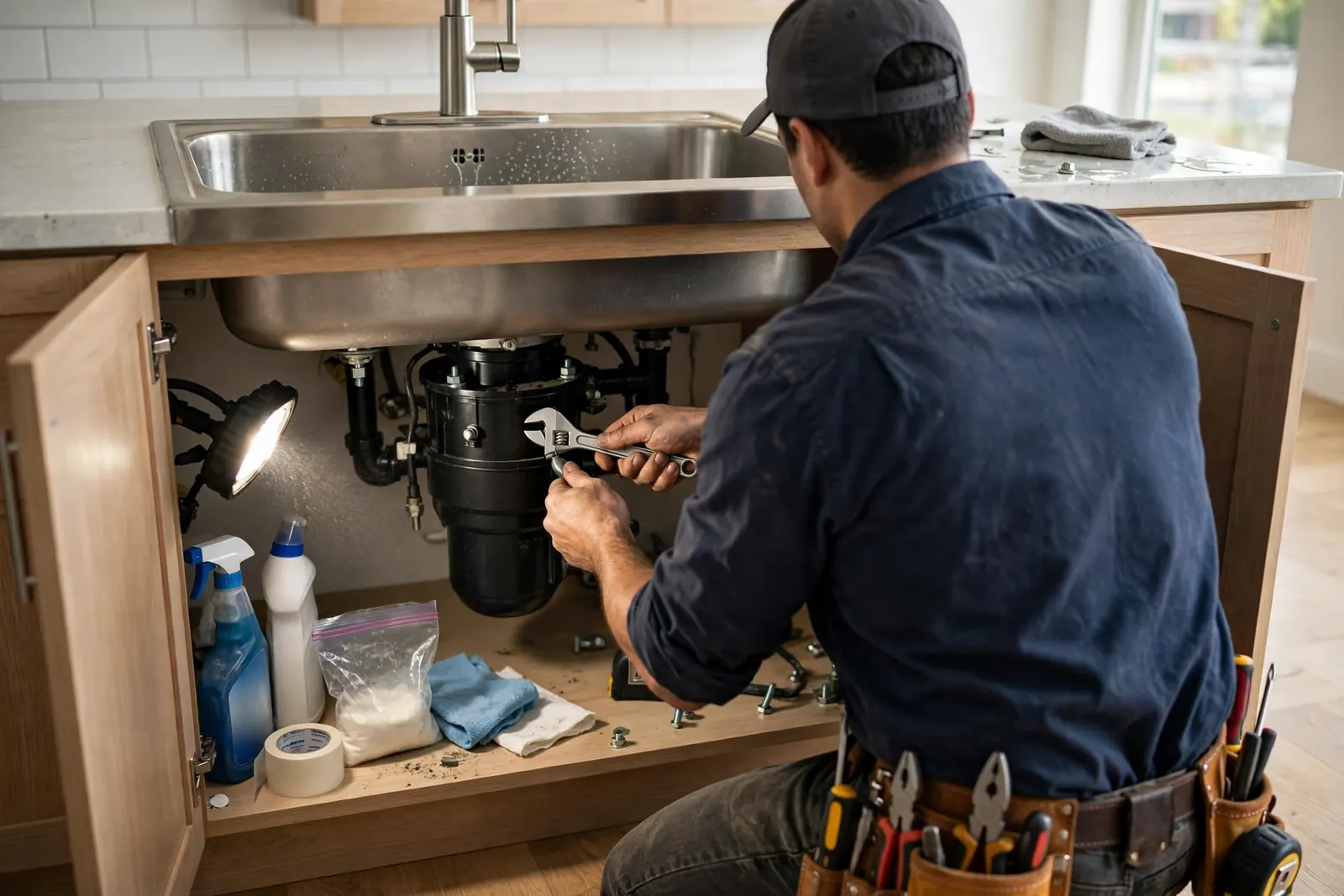
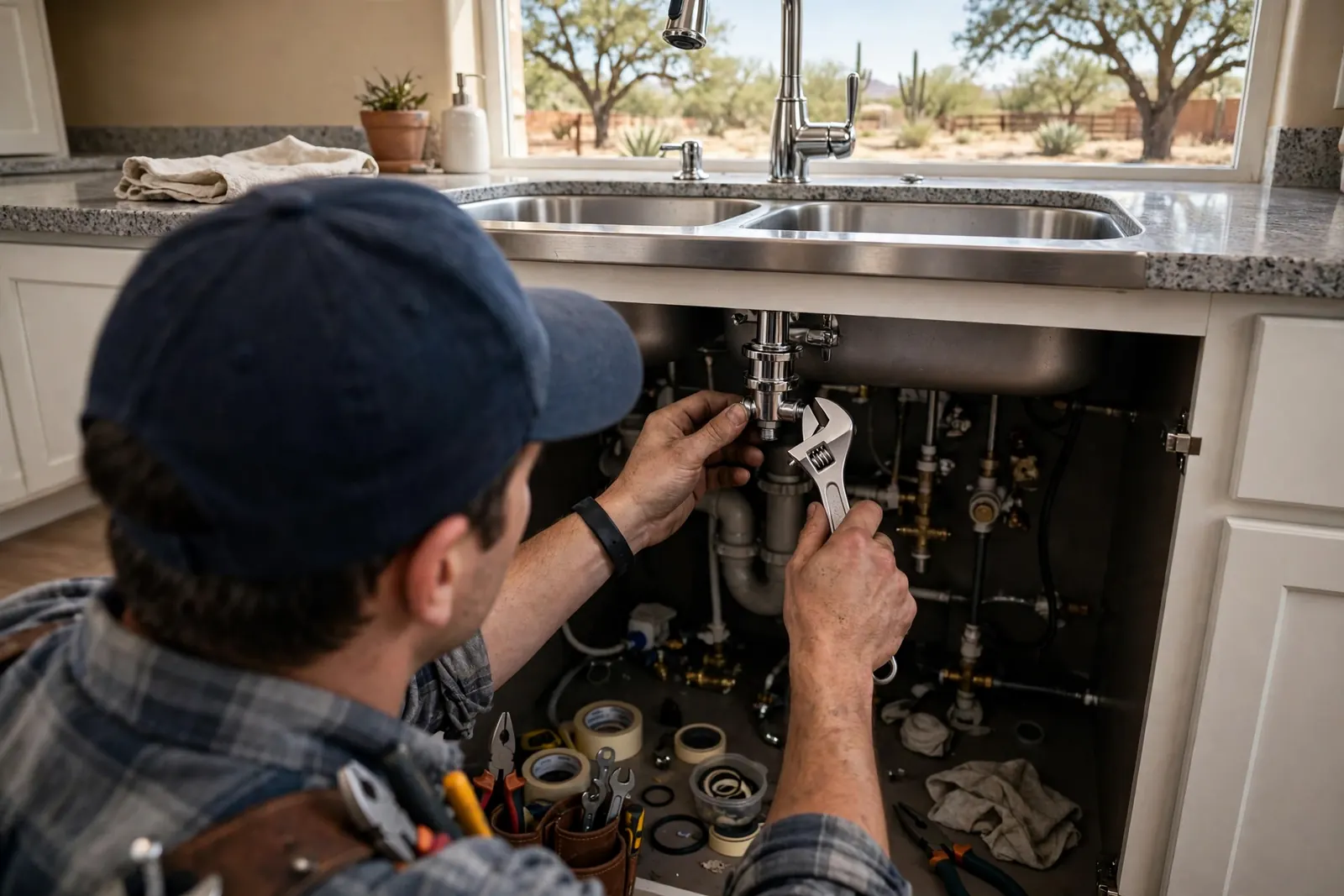
For Homes and Rentals
Sinks get heavy use in a family home, and a small leak under the cabinet can go unnoticed for weeks. We check the whole assembly so the fix lasts.
- Dripping kitchen faucet
- Slow bathroom drain
- Damp cabinet floor
Sink repair is the professional fixing of a leaking or slow-draining sink in a Mount Pleasant, TX home. A sink that leaks underneath or drains slowly is usually a trap, a seal or a supply line that has had enough. NTP Plumbing repairs sinks across Mount Pleasant, TX — kitchen and bathroom — and checks the shutoffs and the disposal while we are under there. Open 24 hours, Monday through Sunday.
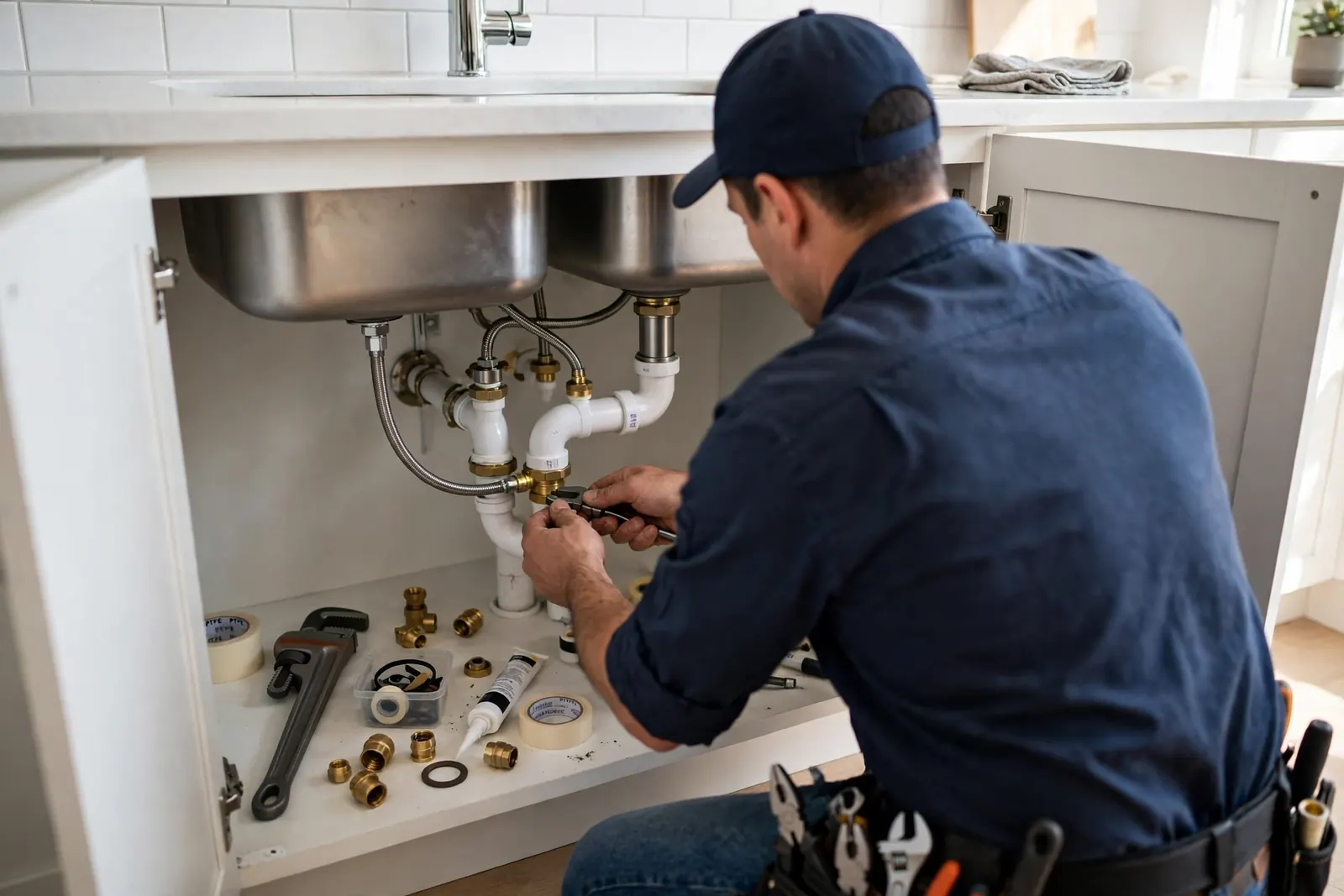 Trap fixedLeak stoppedDrain flowing
Every sink repair starts with a full inspection, not just a look at the part you noticed. We check the whole assembly so a small problem does not turn into a callback. Here is what is covered in a standard repair and what we quote separately if we find it.
We check the faucet, supply lines, shutoff valves, drain basket, P-trap, and the cabinet floor for moisture. This tells us whether the leak is above or below the counter.
Cartridge, seat, and O-ring replacement with parts that fit your faucet. If the valve body itself is cracked, we quote a replacement faucet instead.
Braided stainless or PEX supply lines replaced with new washers and Teflon tape on the threads. We pressure-test both the hot and cold sides before we close the cabinet.
P-trap cleaning or replacement, drain basket resealing, and pop-up assembly repair. If the clog is past the trap, we snake the branch line.
A seized or leaking shutoff valve gets replaced so you can actually turn the water off under the sink when you need to. We use quarter-turn ball valves for easier operation.
We dry the cabinet, run hot and cold water, fill the basin, and watch for leaks. Old parts go with us, and we show you what was replaced before we leave.
A kitchen sink and a bathroom sink fail differently — one is the trap and the disposal, the other is the pop-up stopper and the overflow — but the checks at the end are the same in a home and a rental. What changes is the access, the schedule, and who needs the paperwork for a sink repair job.
Sinks get heavy use in a family home, and a small leak under the cabinet can go unnoticed for weeks. We check the whole assembly so the fix lasts.
A leaking sink in a rental costs money every day it runs. We document the repair and keep the property file current.
A plain-language look at what Sink Repair involves and when it is needed. The City of Mount Pleasant charges a $75 residential plumbing permit fee where a permit is required (inside city limits) — that is a City fee, not our price.
See how it worksMost sink repairs are underneath the sink. A trap that weeps at the slip joint, a basket strainer whose seal has dried out, or a supply line that has started to drip — each one is found by running the water and watching, not by guessing. We replace the failed seal or section, then run the tap and watch every joint before we call the job done.
Kitchen sinks take the harder life: grease, coffee grounds and a disposal that gets used daily. In older Mount Pleasant, TX homes the drain under the kitchen sink is often galvanised or cast iron, and the trap can be corroded through. Bathroom sinks fail more quietly — a slow drain from hair and soap, or a pop-up stopper that will not hold water. Sink repair work follows the 2024 International Plumbing Code adopted by the city.
A leak under the sink is a seal asking to be replaced. Find the seal, replace it, test it.
Here is exactly what happens from the first call to the final test.
You call (903) 350-9085 and tell us what the sink is doing: dripping, backing up, or leaking under the cabinet. We ask a few questions to figure out whether it is a drain issue or a supply issue, then agree a visit time that works for you.
We arrive, put down a mat, and inspect the sink from both sides. That means checking the faucet, the supply lines, the shutoff valves, the drain assembly, and the P-trap. We use a flashlight and a dry paper towel to trace where the water is actually coming from.
Before we touch a wrench, we tell you what we found and what it takes to fix it. You get a quote for the repair before we start. If the shutoff valve is seized or the drain line is corroded, we point it out and let you decide whether to handle it now or later.
We shut off the water, replace the failed part, and use the right materials for the job: a cartridge that fits your faucet, a braided stainless supply line, a new wax ring, or a PVC P-trap. We keep the work area covered and clean up the shavings and old parts before we leave.
We turn the water back on, run hot and cold, fill the basin, and watch the trap and supply lines for any sign of a leak. Then we show you what we replaced and how to shut the water off under the sink if you ever need to. You get a written record of the parts and the work.
Move across a circle, or focus it and press Enter, for an illustrative thermal view of this sink repair photograph.
For loosening supply nuts and drain fittings under the sink where a regular wrench will not fit. The basin wrench reaches the back nut on a faucet without scratching the counter.
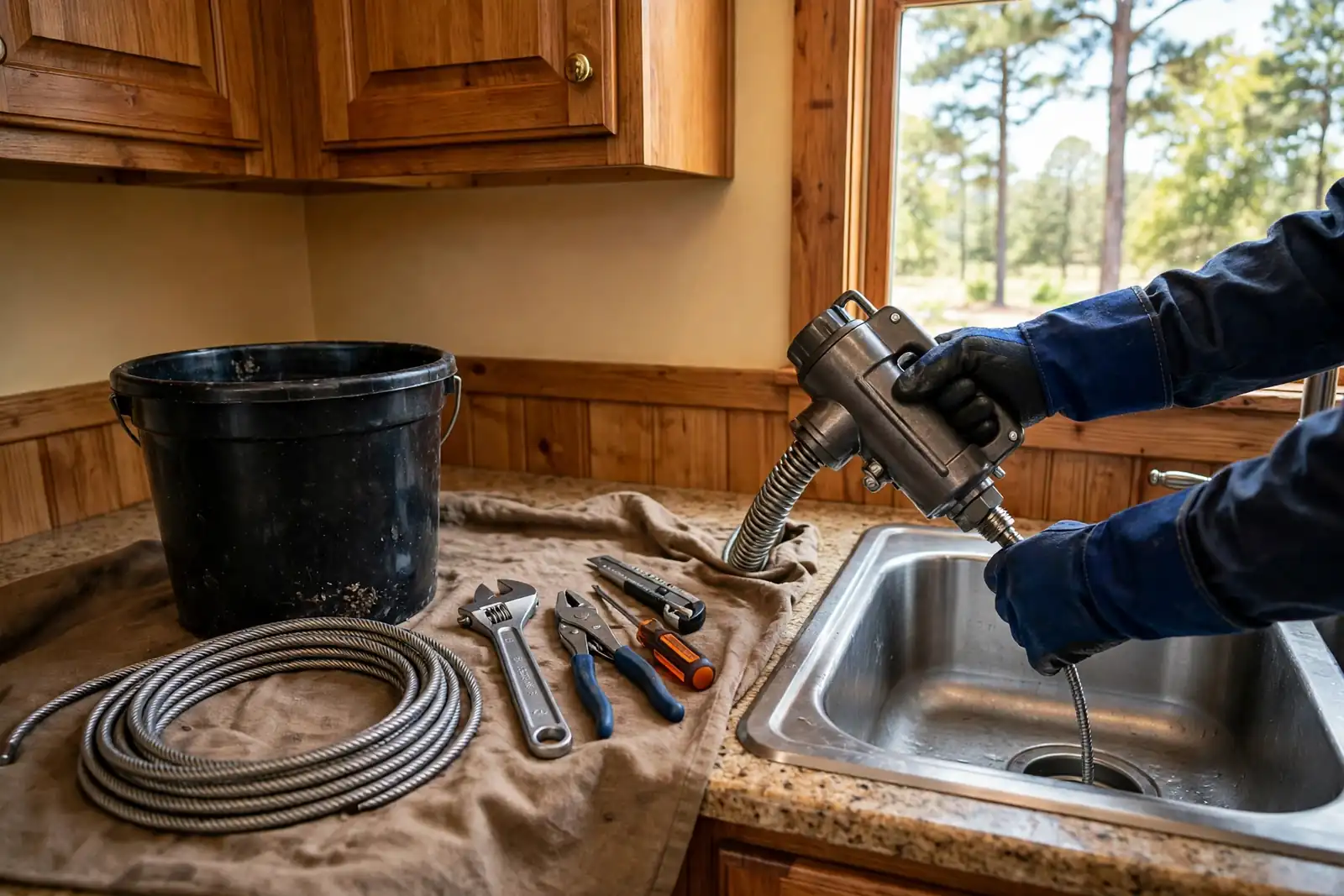
For clearing clogs past the P-trap in the branch line. A hand snake handles most bathroom clogs, and a powered snake handles the longer runs.
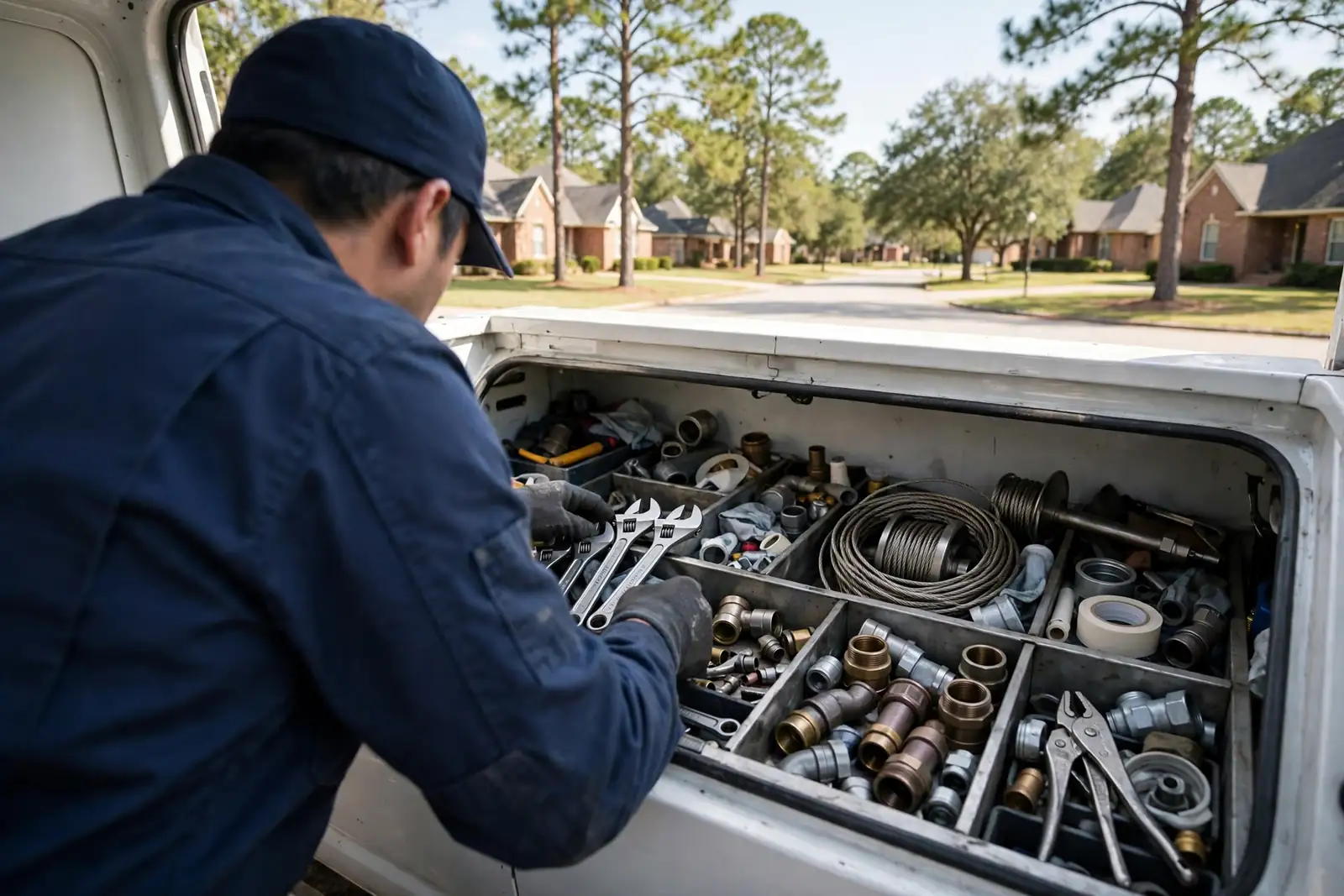
For grease and soap scum that a snake cannot cut. The jetter scours the pipe wall with high-pressure water and restores full flow.

For finding a leak behind a wall or under a cabinet when the source is not visible. It picks up the sound of water escaping under pressure.
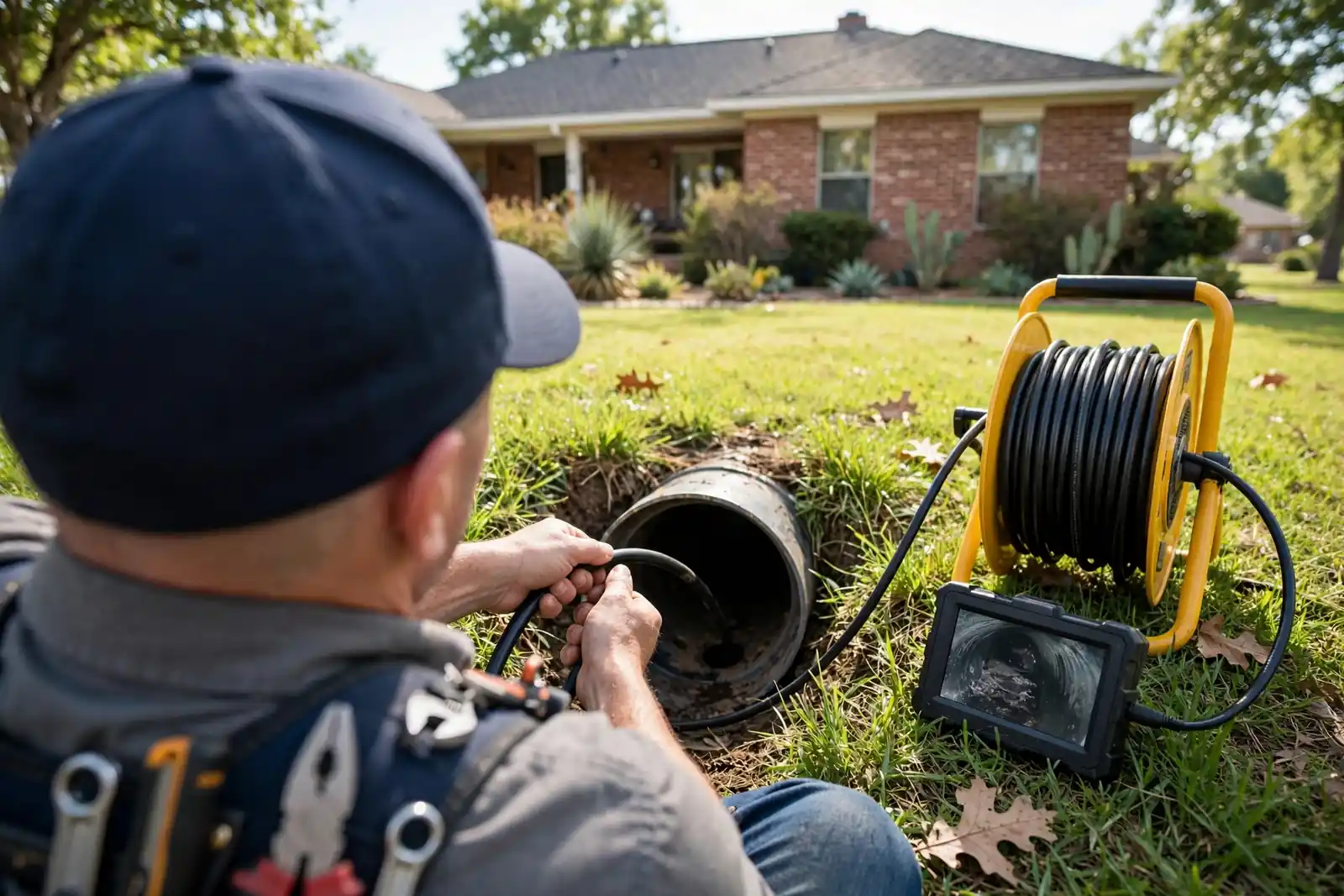
For checking the drain line when a sink backs up repeatedly. The camera shows root intrusion, a collapsed section, or a belly in the pipe.
Thermal views are illustrative, generated from photographs of sink repair work in Mount Pleasant, TX.
For making a secure connection when we replace a supply line with PEX tubing. The crimp ring is checked with a gauge before the water goes back on.
For copper pipe repairs where a section has to be cut out and a new piece sweated in. We use it when the existing line is copper and a push-to-connect fitting is not the right call.
We size drain and supply lines and set fixtures to code on every repair. That matters when a repair is inspected or when a future owner has the plumbing looked at before a sale.
After a supply repair, we turn the water on and watch the connection under pressure. A repair that holds at static pressure but fails when the faucet opens is not done.
We fill the basin and let it drain, then run the faucet and watch the trap for backup. If the flow is slow, the clog is still there and we keep working until it clears.
We dry the cabinet and check the floor and shelf for lingering moisture after the repair. If the wood is wet, we tell you what to do to dry it out before mold sets in.
Water pools under the kitchen sink after every use.
The trap joint was weeping. We replaced the trap and the strainer seal, then ran the tap and watched every joint.
Outcome: A dry cabinet and a trap that holds.
The bathroom sink drains slowly.
Hair and soap had built up in the trap and the pop-up. We cleared both and the drain runs free.
Outcome: A sink that empties as fast as it fills.
A supply line under the sink drips onto the cabinet floor.
We replaced the failed line and the stop, and dried the cabinet before we left.
Outcome: A dry cabinet and a line that holds at pressure.
A lake house sink smells after weeks empty.
The trap had dried out. We refilled it and checked the vent.
Outcome: A fresh-smelling sink, with the trap and vent checked.
A rental kitchen sink leaks before the new tenant moves in.
We replaced the trap and strainer seal, and checked the disposal connection at the same visit.
Outcome: A dry, working sink ready for move-in day.
Kitchen sink calls are the most common, and they follow the kitchen's age: Downtown homes and Southgate ranches still run their original traps and galvanised drains, while newer Northwood and Stone Briar kitchens fail at the disposal connection or the strainer seal. Bathroom sinks are usually a slow drain or a tired pop-up stopper.
A smell from the sink is often a dry trap — common in lake houses that sit empty between stays around the Peninsulas and Mariner's Retreat. If the kitchen sink is the one clogging, our guide on how to unclog a kitchen sink drain safely covers what is safe to try before you call.
Example — a typical call. The stories below are illustrative examples of the kind of sink repair calls we take, not a record of a specific past job.
Before: A homeowner in Downtown Mount Pleasant, TX had a damp cabinet floor. The braided supply line had a pinhole leak that only showed when the faucet was on, and the cabinet floor was starting to swell.
After: We replaced both hot and cold supply lines, swapped the stiff shutoff valves for quarter-turn ball valves, and dried the cabinet.
Check under the sink once a month for moisture and replace braided supply lines every 5 to 7 years, or sooner if they show fraying or rust at the fittings.
Before: A renter in Carolina Way had a bathroom sink that drained slowly and gurgled when the toilet flushed. The pop-up stopper was stuck in the open position and the trap was full of hair and soap.
After: We pulled the trap, cleared the hair and soap buildup, replaced the pop-up assembly, and snaked the branch line. The sink now drains properly and the gurgling stopped because the vent is clear.
Run hot water down the drain after each shave, and pull the stopper once a month to clear hair before it reaches the trap.
Before: A kitchen faucet in Stone Briar dripped constantly and the handle was hard to turn. The cartridge was scaled up from hard water and the O-rings were flattened, so water bypassed the valve even when the handle was off.
After: We rebuilt the faucet with a new cartridge and O-rings, cleaned the aerator, and resealed the base. The drip stopped completely and the handle turns with one finger.
Wipe the faucet dry after use and clean the aerator every 6 months to keep scale from building up. A water softener cuts the scale that wears cartridges out.
Most sink calls fall into a handful of categories. Here is what we see most often in Mount Pleasant and what happens if you leave it alone.
A proper repair stops the leak and protects the cabinet underneath.
A faucet dripping once per second wastes a lot of water over a year, and that shows up on your water bill. We replace the cartridge or valve seat so the drip stops at the source.
Water under a sink does not stay under the sink. It wicks into the cabinet floor, swells the particleboard, and feeds mold. Catching a sink leak early usually means a supply line or trap replacement instead of a cabinet rebuild. We dry the area and confirm no moisture is left behind.
A bathroom sink drain is often a hair-and-soap clog in the P-trap or the pop-up assembly. We pull the stopper, clean the trap, and snake the branch line if needed, so the sink drains fast instead of pooling water every time you wash your hands.
You do not need a new sink to fix a leaking one. Replacing a cartridge, a drain basket, or a set of supply lines keeps the counter and cabinet untouched. We tell you honestly when a repair makes sense and when it does not.
Clear records from your sink repair job that you can keep and share.
Parts replaced and work performed
Before and after of the repair
Brand and part numbers used
Pressure and flow check results
The sink basin, the faucet, and the drain are three separate parts, and each one can be repaired or replaced on its own.
Fixing the failed part on an otherwise sound fixture
Installing a new faucet, drain, or basin
Replacing the internal parts of a faucet
A list like this tells people straight away whether we cover their street for sink repair. Not listed? Call and ask — it only takes a minute.
Based in Mount Pleasant and covering the places around it. Pick one for local details.
Usually a trap joint that weeps, a basket strainer seal that has dried out, or a supply line that has started to drip. We run the tap and watch every joint to find which one it is.
Usually hair and soap build-up in the trap or the pop-up stopper. In older homes the drain line itself can be scaled or corroded. We check the trap first, then the line beyond it.
Often a dry trap — the water seal that blocks sewer gas has evaporated, common in a sink that is not used for weeks. Running the tap refills it. If the smell stays, the trap or the vent needs checking.
Yes, in most cases. Traps, seals, strainers and supply lines are all repairable. If the sink itself is cracked or the basin is stained through, we will say so and lay out the replacement option.
Other services from the same team.
Call (903) 350-9085 and tell us which sink is leaking or draining slowly. We will check the trap, the seals and the supply lines. Open 24 hours, Monday–Sunday.
Call (903) 350-9085 any time — NTP Plumbing is open 24 hours, Monday–Sunday. Tell us what you are seeing and we will talk you through shutting the water off if you need to. We serve Mount Pleasant, TX, including ZIP codes 75455 and 75456.