Toilet running constantly? Fix it in Mount Pleasant, TX
A toilet running constantly wastes water around the clock and pushes your water bill up. In most Mount Pleasant, TX homes the cause is one of three parts inside the tank — and two of them are easy to check yourself.
Summary: A running toilet is water flowing from the tank into the bowl without stopping — usually the tank leaking into the bowl, or the fill valve never shutting off. Over a month that adds up to a noticeable share of a water bill. The good news is that the parts involved are simple, cheap, and visible.
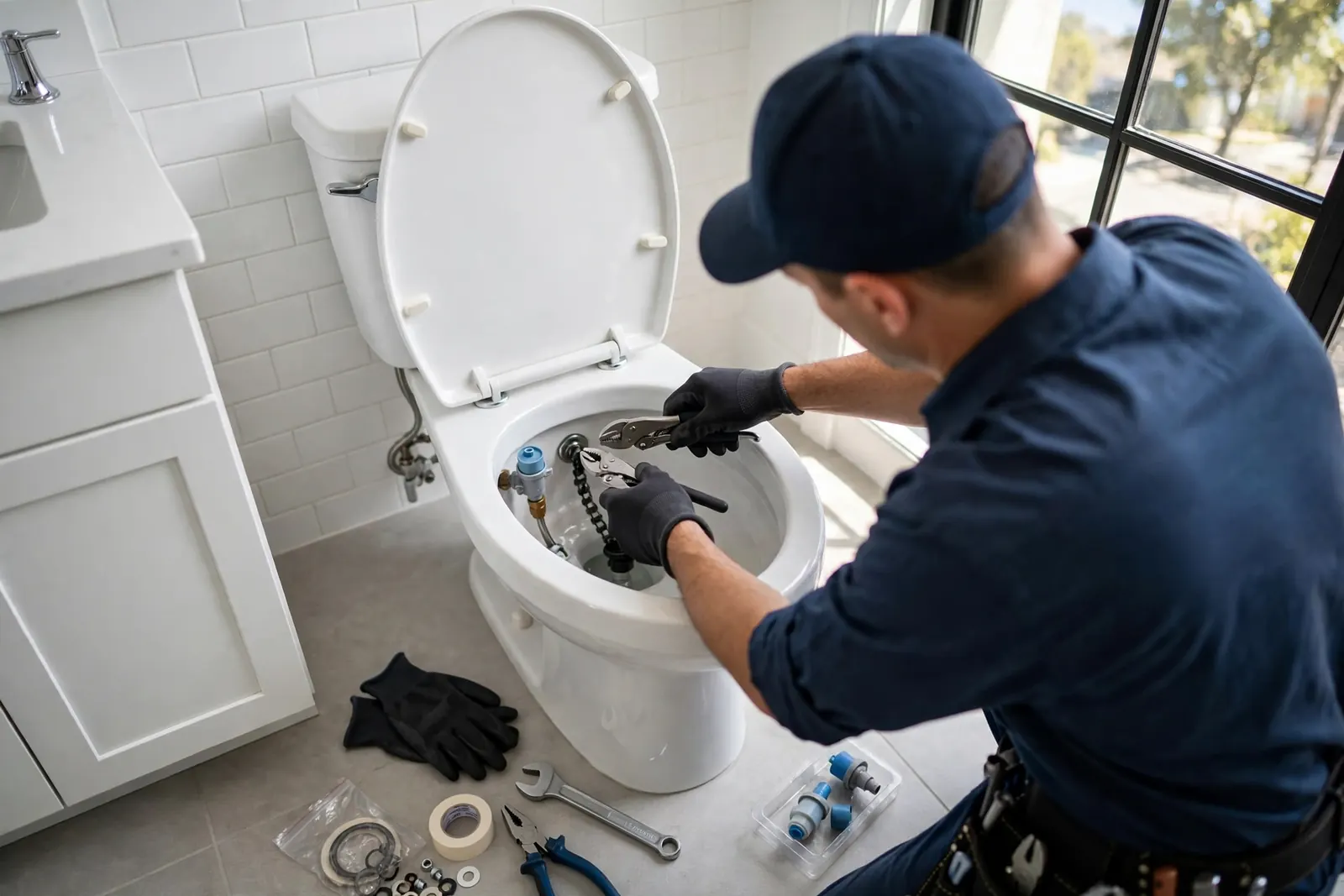
A running toilet is the sound of water flowing from the tank into the bowl without stopping. It usually means the tank is leaking into the bowl, or the fill valve never shuts off. Either way, the water meter is turning when nobody is using water — and over a month, that adds up to a noticeable share of a Mount Pleasant, TX water bill.
The good news is that the parts involved are simple, cheap, and visible. Lift the tank lid and you can see almost everything that matters.
Toilet running constantly: the three causes that cover almost every running toilet
Nine times out of ten, a running toilet is one of these:
- A worn flapper — the rubber seal at the bottom of the tank warps, cracks, or gets coated in mineral deposits, so water leaks into the bowl.
- A failing fill valve — the valve that refills the tank does not shut off, or shuts off too late, so water keeps flowing into the overflow tube.
- A water level set too high — the tank fills past the top of the overflow tube, and the excess runs straight into the bowl.
Less often, the overflow tube itself is cracked, or the flush valve seat is pitted and will not seal even with a new flapper. Those need a closer look, but start with the three above.
Check the flapper first
The flapper is the rubber disc that seals the flush valve at the bottom of the tank. Take the lid off, flush, and watch it. It should lift, then settle flat and seal. If it looks warped, feels stiff, or leaves a dark ring on your fingers, it is worn out.
Try the dye test: put a few drops of food colouring in the tank, wait twenty minutes without flushing, and look in the bowl. Colour in the bowl means tank water is leaking past the flapper. Flappers are a standard part and take minutes to swap — match the size and type to your flush valve, and clean the valve seat with a cloth before fitting the new one so it seals properly.
Check the fill valve and water level
If the flapper seals but the toilet still runs, watch the fill valve. After a flush, the tank should fill to about an inch below the top of the overflow tube, then stop. If water keeps flowing, or the level sits above the overflow tube, the fill valve is the problem.
Most modern fill valves adjust with a screw or a sliding clip on the float. Lower the float a little at a time until the water stops about an inch below the overflow tube. If the valve keeps running no matter where the float sits, or it hisses and sputters, the valve seals have failed and the valve needs replacing. Replacing a fill valve is also a job where the water supply to the toilet must be shut off first — the shut-off valve is usually on the wall behind the toilet.
Note the permit position, too: under Texas law, replacing a fill valve (a ballcock or water control valve) and replacing a water closet are among the jobs that do not need a City permit. That does not mean the work is exempt from the plumbing code — it still has to be done right.
When the problem is not in the tank
Sometimes the tank is fine and the toilet still runs. Check these:
- The flush handle or chain — a chain that is too short holds the flapper open; a chain that is too long tangles and holds it open too.
- The overflow tube — a cracked tube leaks tank water into the bowl at any level.
- The flush valve seat — mineral deposits or pitting stop even a new flapper from sealing.
- High water pressure — pressure above the code limit can keep a fill valve from seating. Mount Pleasant, TX water comes from Lake Bob Sandlin and Lake Cypress Springs, and pressure varies by street and elevation, so a pressure check is worth doing if valves keep failing.
If you have replaced the flapper and the fill valve and the toilet still runs, the seat or the pressure is the next thing to check — and that is the point to call us.
How much water a running toilet actually wastes
A toilet that runs constantly can waste a large volume of water every day — far more than a dripping faucet. That shows up directly on the water bill, and it is the single most common cause of a sudden bill increase we see in Mount Pleasant, TX. If your bill jumped and nothing else changed, check every toilet in the house with the dye test before looking anywhere else. Our guide to lowering your water bill with simple plumbing fixes in Mount Pleasant, TX starts with the same check, because it is the cheapest fix with the biggest return.
When to call a plumber
Call us if the shut-off valve behind the toilet is stuck or leaking, if the flush valve seat is pitted, if the toilet rocks or leaks at the base, or if you have replaced the tank parts and the running continues. A toilet that leaks at the base is a different problem — the wax seal has failed — and it needs attention before the floor underneath is damaged.
Our toilet repair service in Mount Pleasant, TX covers flappers, fill valves, flush valves, and seals, and toilet installation in Mount Pleasant, TX is the answer when the porcelain itself is cracked or the fixture is past sensible repair. Older two-bath homes in Southgate and the Greenhill Park area often still have original 1970s–1990s toilets, where the tank parts are all reaching the end of their life at once — replacing them together is usually the sensible call.
Get help with plumbing in Mount Pleasant, TX
A running toilet is a small job with a big water bill attached. Check the flapper, check the water level, and if it still runs, let us take a look. Call NTP Plumbing at (903) 350-9085 — open 24 hours, Monday–Sunday.