Sewer line repair vs replacement for Mount Pleasant homeowners
A cracked pipe in one spot is usually a repair. A collapsed, root-choked, or back-pitched line is usually a replacement. Here is how to weigh sewer line repair vs replacement in Mount Pleasant, TX.
Summary: The most expensive mistake in sewer work is guessing: a repair on a line that needs replacing wastes money and fails again, and a replacement on a line that needed one repair wastes far more. The difference is decided by what a camera shows — not the age of the house, the symptom, or a quote given over the phone.
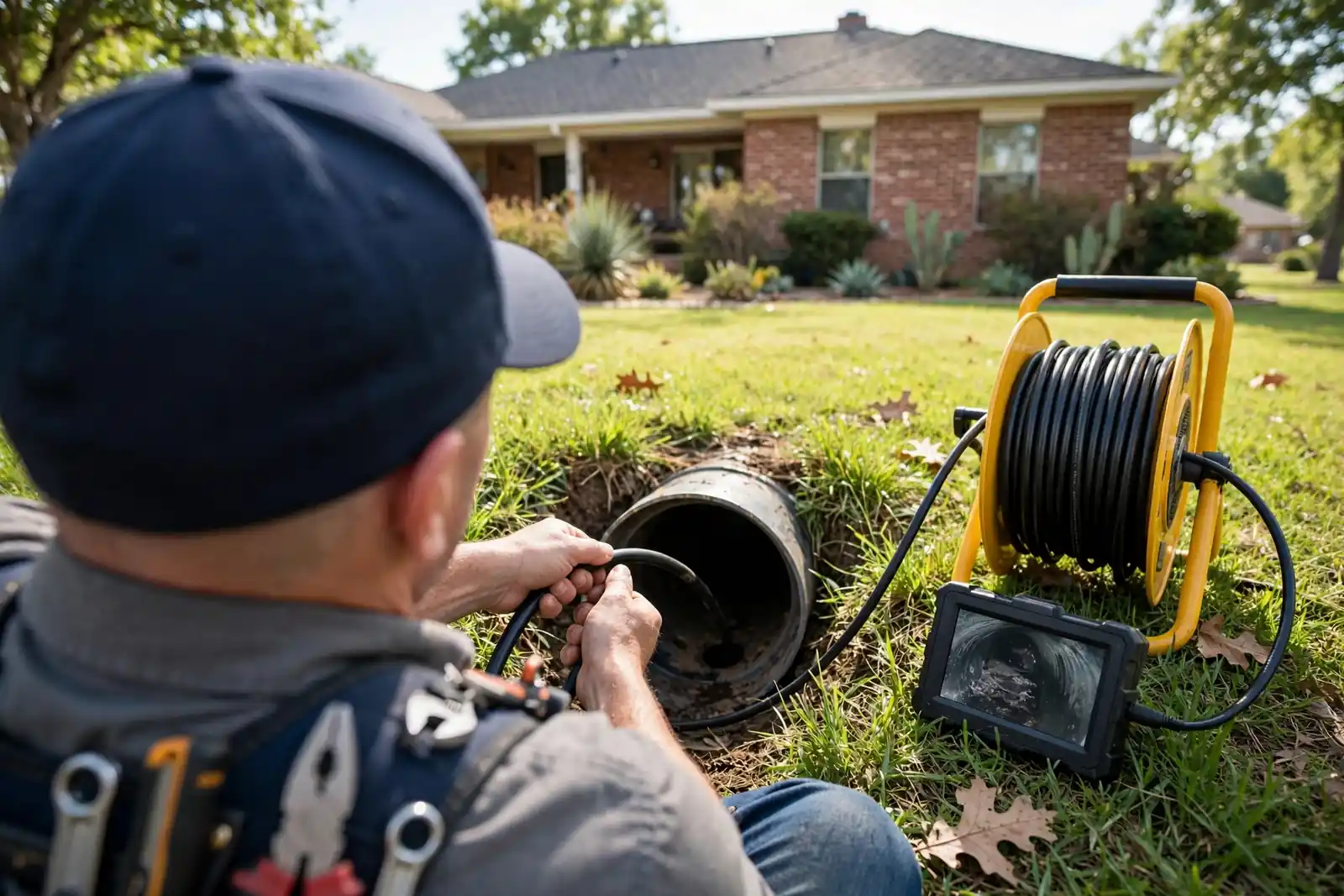
The most expensive mistake in sewer work is guessing. A repair on a line that needs replacing wastes money and fails again. A replacement on a line that needed one repair wastes far more. The difference is decided by what a camera shows — not by the age of the house, not by the symptom, and not by a quote given over the phone.
We are NTP Plumbing, and this is the decision we walk Mount Pleasant, TX homeowners through most often. Here is how it is actually made.
Sewer line repair vs replacement: when a repair is the right answer
Repair fits when the damage is local and the rest of the line is sound:
- One crack or one bad joint. A single crack from soil movement, with the pipe otherwise straight and solid.
- A short root intrusion. Roots entering at one joint, with the pipe intact behind them.
- A damaged section under a driveway or patio. A spot repair avoids disturbing the rest of the line.
- A separated joint. Two pipe sections that have pulled apart at one connection.
A repair replaces or lines the damaged section and leaves the rest of the line alone. It is the right call when the camera shows one problem in an otherwise healthy pipe. Our sewer line repair service in Mount Pleasant, TX starts with the camera, because a repair without one is a guess.
When replacement is the right answer
Replacement fits when the problems are spread along the line or the pipe itself has failed:
- Collapse. A section of cast-iron pipe that has caved in. There is nothing to repair — the pipe is gone.
- Multiple breaks. Cracks at several joints along the run. Repairing them one at a time costs more than replacing the line.
- A belly. A sagging section where waste pools and the line clogs repeatedly. The shape of the pipe is wrong, and cleaning cannot fix a shape.
- Back-pitch. A section that slopes the wrong way, so waste flows back instead of out.
- End-of-life pipe. Cast iron that is scaled, thin, and failing along its whole length.
Replacement also makes sense when the line has already been repaired twice and failed again. At that point the line is telling you its condition, and the honest answer is a new one. Our sewer line replacement service in Mount Pleasant, TX covers full-line replacement once the camera has shown the extent of the damage.
What the camera decides
The camera run is the step that separates a repair from a replacement. It shows the type of damage, how many places it occurs, the length of the damaged sections, and the condition of the joints between them. It also gives the exact distance from the clean-out, so the work is dug in the right place and only where it is needed.
Ask for the recording. A repair-or-replace decision you cannot see is a decision you cannot check. If the line is in good shape apart from one defect, the camera proves it. If the line is failing along its length, the camera proves that too — and it is the evidence that makes a replacement quote credible.
Why Mount Pleasant, TX lines fail the way they do
Two local facts shape almost every sewer decision in town. First, the housing stock: Mount Pleasant, TX has a median home build year of 1978, with more than half of homes built before 1980, and many of those homes still have cast-iron drains. Cast iron develops horizontal cracks from soil movement and can collapse outright. Second, the soil: East Texas red clay swells when wet and shrinks when dry, shifting rigid pipes, cracking joints, and creating the bellies that cause repeat clogs.
Long laterals make it worse. The 0.29–0.45-acre lots in Southgate mean longer runs to the street than the small 0.15–0.31-acre in-town lots around downtown Mount Pleasant, TX, and a longer line has more joints to fail. Tree roots follow the same pattern: mature trees plus cracked cast iron is the combination we find most.
Permits and the sewer connection rule
New sewer work and relocating a sewer line need a permit from the City of Mount Pleasant, TX, and the work follows the 2024 International Plumbing Code adopted under Ordinance 2026-2, effective 20 January 2026. The City's rules also require a city sewer connection where city sewer is available within 400 feet of a residential property, and a house sewer may not cross another lot without an easement. Permits are handled when required. Inside the city limits, homes connect to city sewer; outside the limits, some properties use an on-site system — verify which serves the address before planning any sewer work.
The question to ask before you agree
Before agreeing to either a repair or a replacement, ask for the camera recording and the written scope: what will be done, where, by what method, and what happens if more damage is found once the ground is open. A scope that names the location and the method is a scope you can hold someone to. A scope that says "fix the sewer" is not.
Our drain cleaning service in Mount Pleasant, TX can clear a line, but cleaning is not a repair — if the camera shows damage, the decision above is the one that follows. Read the signs your sewer line is clogged in Mount Pleasant, TX to know when to start this process.
Get help with plumbing in Mount Pleasant, TX
Repair or replacement is a camera decision, not a guess. Get the line inspected, see the recording, and decide from there. Call NTP Plumbing at (903) 350-9085 — open 24 hours, Monday–Sunday.